

How Common Is a Botched Male Enhancement?
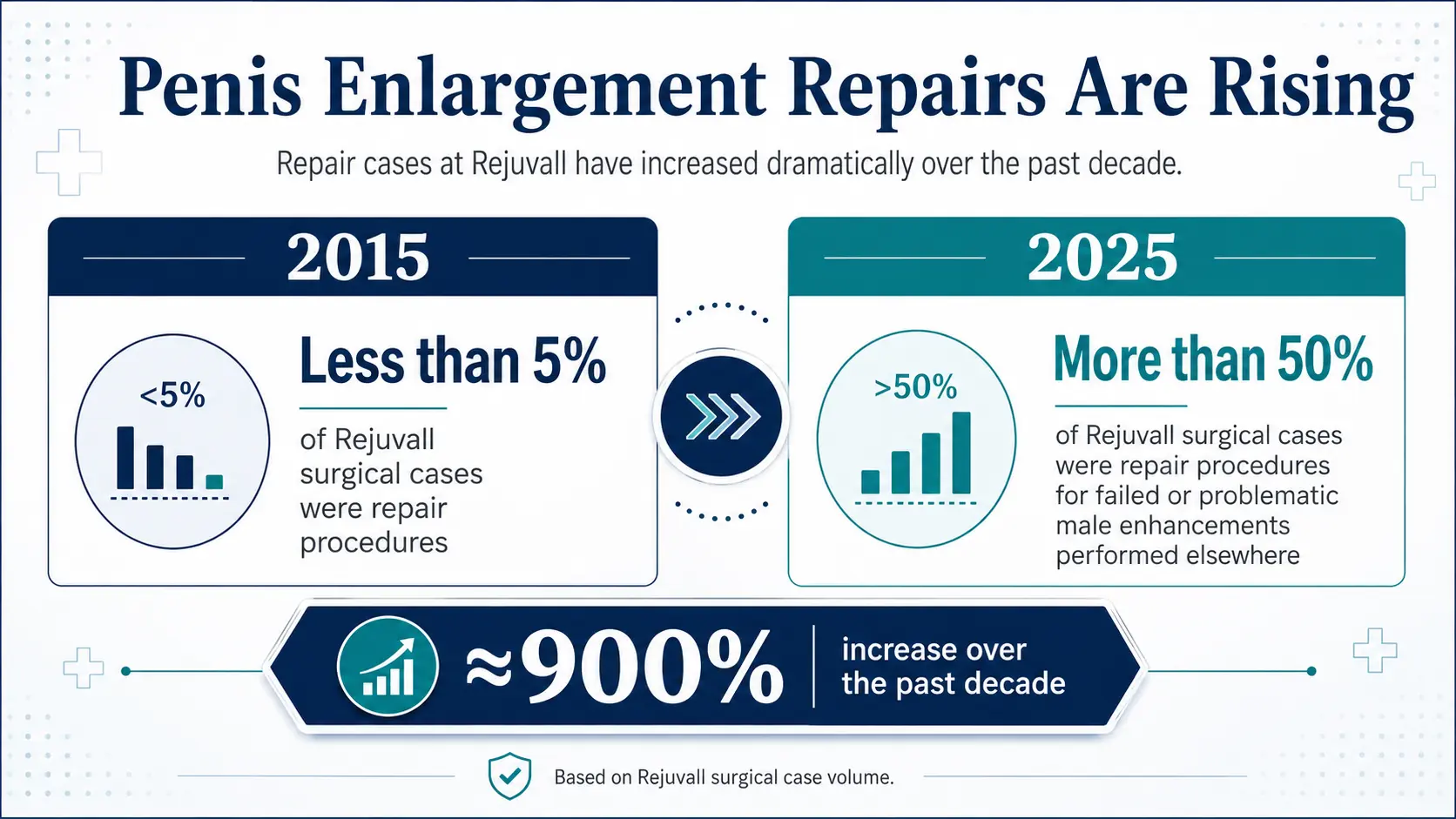
The number of patients seeking treatment for complications after male enhancement procedures performed elsewhere has increased dramatically over the past decade.
At Rejuvall, more than half of the surgical procedures performed at our clinic in 2025 were repair procedures for failed or problematic male enhancements that were performed elsewhere. In 2015, repairs represented less than 5% of our surgical cases.
That represents approximately a 900% increase over the past decade. Based on what we are continuing to see in our Atlanta clinic, this trend does not appear to be slowing down.
The increase is not tied to one specific procedure or one specific type of complication. We now evaluate patients with problems following injectable fillers, permanent materials, surgical lengthening procedures, fat transfer, silicone implants, graft-based procedures, circumcision, and other forms of male enhancement.
Some complications become apparent relatively quickly. Others may not cause significant symptoms until months or even years after the original procedure.
This growing repair volume is one of the reasons we believe patients need to understand not only what procedure they are considering, but also what material is being used, who is performing it, where that material is being placed, and what options exist if something goes wrong.
What Are the Most Common Causes of Botched Male Enhancements?
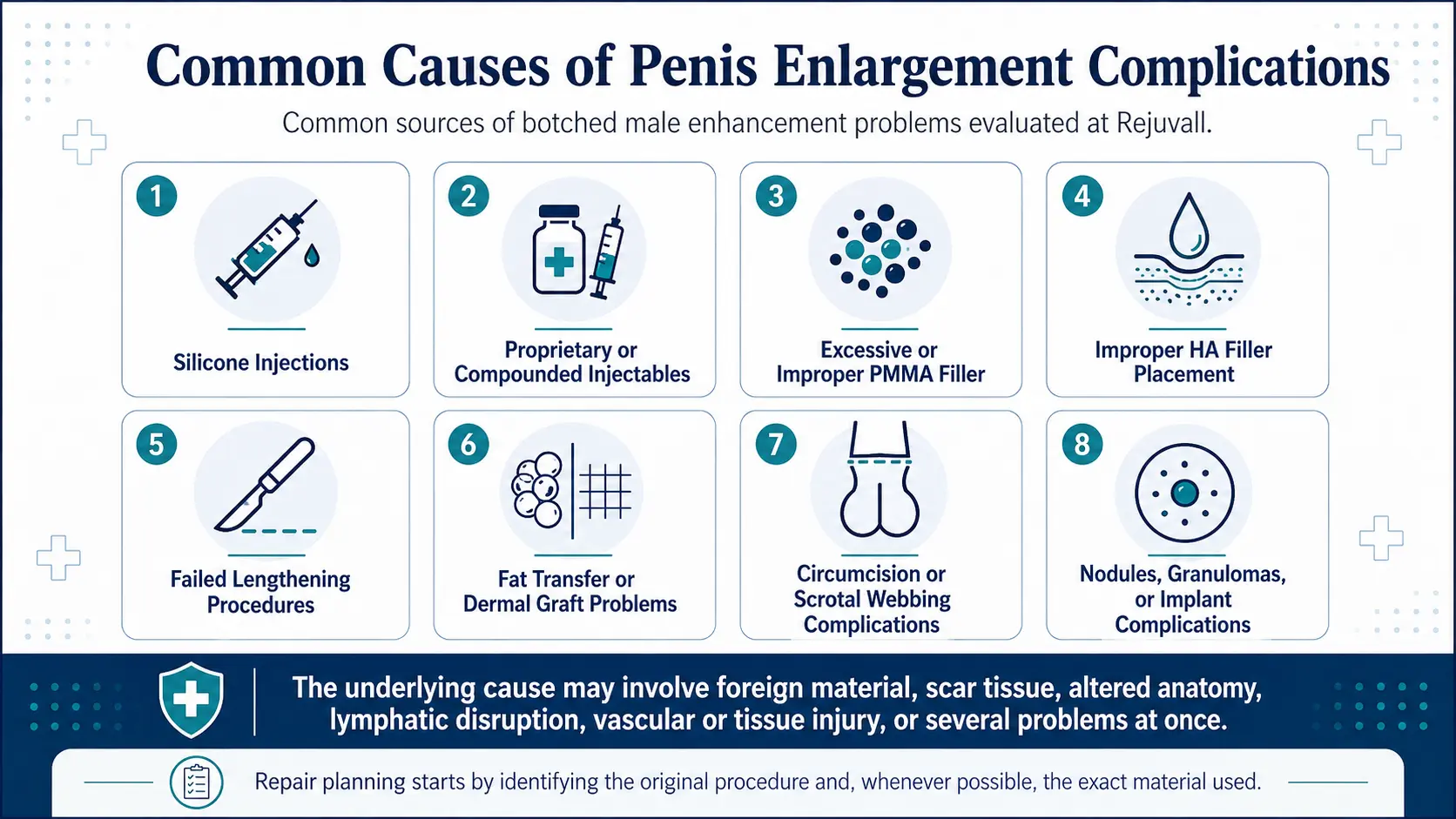
Based on the repair cases we treated in 2024 and 2025, the most common sources of complications include:
- Silicone injections, including products sometimes marketed as “collagen-inducing injections”
- Proprietary or custom-compounded injectable materials
- Excessive or improperly placed PMMA filler
- Improperly placed or poorly managed hyaluronic acid (HA) filler
- Girth enhancement performed on uncircumcised patients, which can contribute to phimosis and other complications
- Failed penile lengthening procedures, including loss of length, ligament reattachment, or failure to achieve the expected result
- Penile enlargement procedures that cause or worsen significant scrotal webbing
- Complications following P-Shot procedures
- Botched adult circumcisions
- Failed silicone implant procedures
- Loss of girth, irregularity, or tissue problems following fat transfer
- Dermal graft degradation or unevenness
- Nodules and granulomas caused by injectable fillers, fat transfer, or other enhancement materials
We also frequently treat men with complications from circumcisions performed much earlier in life, including procedures performed shortly after birth.
These problems may not become significant until adulthood and can include changes in penile shape, pain during erection, penile lesions, problematic frenulum anatomy, or significant scrotal webbing.
The important point is that a “botched penis enlargement” is not a single type of complication.
The underlying cause may involve foreign material, scar tissue, altered anatomy, lymphatic disruption, vascular or tissue injury, surgical changes, or a combination of several problems at once.
That is why identifying the original procedure and, whenever possible, the exact material used is so important when planning a repair.
Cosmetic Urology: The Wild West of Healthcare
Cosmetic urology has grown rapidly over the past decade as more men seek options to increase penile length, girth, or improve appearance.
With that growth, however, has come a sharp increase in the number of providers offering penile enhancement procedures without extensive training in urology, male sexual medicine, penile anatomy, or reconstructive surgery.
At Rejuvall, the complications we are seeing most often tend to come from two broad categories of providers and procedures:
- Clinics using proprietary, patented, or custom-compounded injectable materials that may be marketed as “collagen-inducing injections.” Some of these products combine permanent or semi-permanent substances with carrier materials, and patients are not always given a clear explanation of exactly what is being injected.
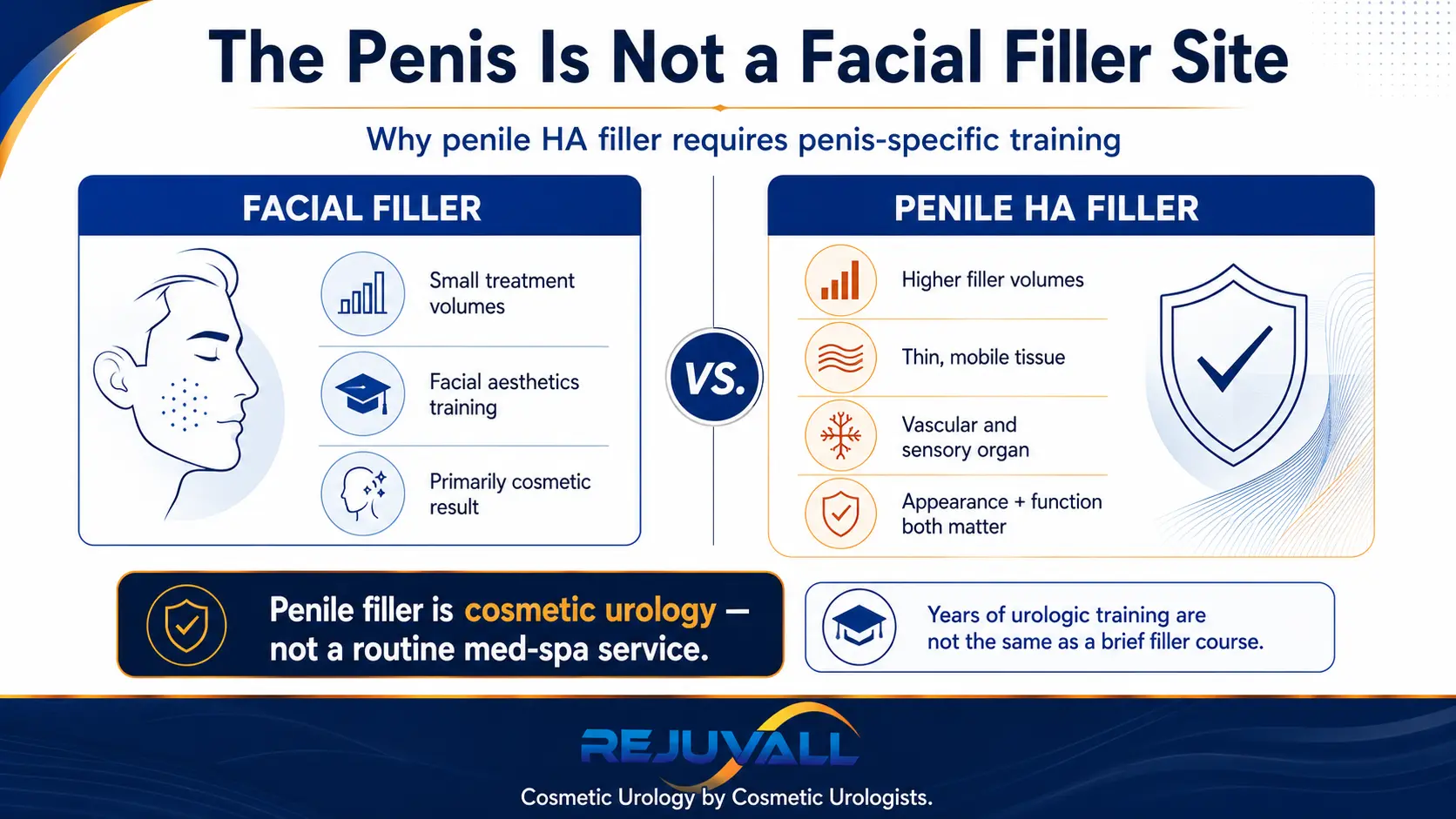
- Providers offering penile filler with limited penile-specific training. In many cases, practitioners begin offering penile injections after a weekend training course or by applying experience from facial filler injections to the penile shaft.
The problem is that penile enhancement is not simply another cosmetic injection procedure.
The penis is a specialized, highly vascular organ with complex anatomy, tissue behavior, lymphatic drainage, erectile function, and healing characteristics that are very different from facial tissue.
As the number of cosmetic penile procedures has increased, so has the number of patients coming to us with complications that can be difficult, expensive, and sometimes impossible to fully reverse.
Because of what we are seeing in our repair clinic, we have come to describe the current state of cosmetic urology as the “Wild West of Healthcare.”
Why Do We Use That Term?
There are several reasons:
- There are currently no universally accepted standards of care specifically governing cosmetic penile enhancement procedures.
- There is no single universally recognized certification for cosmetic penile enhancement providers. In some cases, clinics or franchised networks create their own training or certification programs.
- Regulatory oversight can vary depending on the procedure, the product being used, whether the material is compounded, and how it is marketed or administered.
- Some complications do not become significant until years after the original procedure, long after the patient may have assumed the treatment was successful.
These gaps make it especially important for patients to understand exactly what procedure they are receiving, what material is being used, whether that use is FDA-approved or off-label, what training the provider has, and what options are available if a complication develops later.
Why This Matters
Many men assume penile filler or male enhancement is simply an aesthetic treatment.
The same product that may be routinely injected into the face will behave very differently when placed in penile tissue because the anatomy, blood supply, lymphatic drainage, skin mobility, erectile expansion, and mechanical demands are entirely different.
The same principle applies to permanent fillers, silicone, compounded injectables, surgical implants, ligament procedures, fat transfer, and graft-based techniques.
A treatment can look straightforward from the outside while creating a much more complicated problem beneath the skin if the material, volume, tissue plane, or procedure is inappropriate.
That is why patients should evaluate a penile enhancement procedure with the same level of caution they would use when choosing a surgeon for any other procedure involving an important organ.
What Can Patients Do to Reduce Their Risk?
Before undergoing any penile enhancement procedure, patients should ask:
- What exactly is being injected, implanted, transferred, or surgically altered?
- Is the product FDA-approved, and is its use in the penis considered off-label?
- Who will actually perform the procedure?
- Is that provider a board-certified urologist?
- What specific training does the provider have in penile anatomy and reconstructive urology?
- How often does the provider perform this specific procedure?
- What complications have they treated themselves?
- If something goes wrong, can that provider personally perform the repair?
- What happens if the material migrates, becomes inflamed, forms scar tissue, or causes functional problems?
- Are there long-term complications that may not appear for several years?
Patients should also be cautious of vague descriptions such as “proprietary filler,” “patented filler,” or “collagen-inducing injection” without a clear explanation of every material being placed into the body.
When it comes to penile enhancement, patients deserve to know exactly what is being done to their anatomy before they consent to treatment.
Why Board-Certified Urologists Are the Gold Standard for Penile Enhancement and Repair
Penile enhancement procedures require more than the ability to perform an injection or cosmetic procedure.
They require a detailed understanding of male genital anatomy, erectile physiology, blood flow, nerves, lymphatic structures, tissue planes, wound healing, and the management of complications.
That becomes even more important when a patient needs a repair.
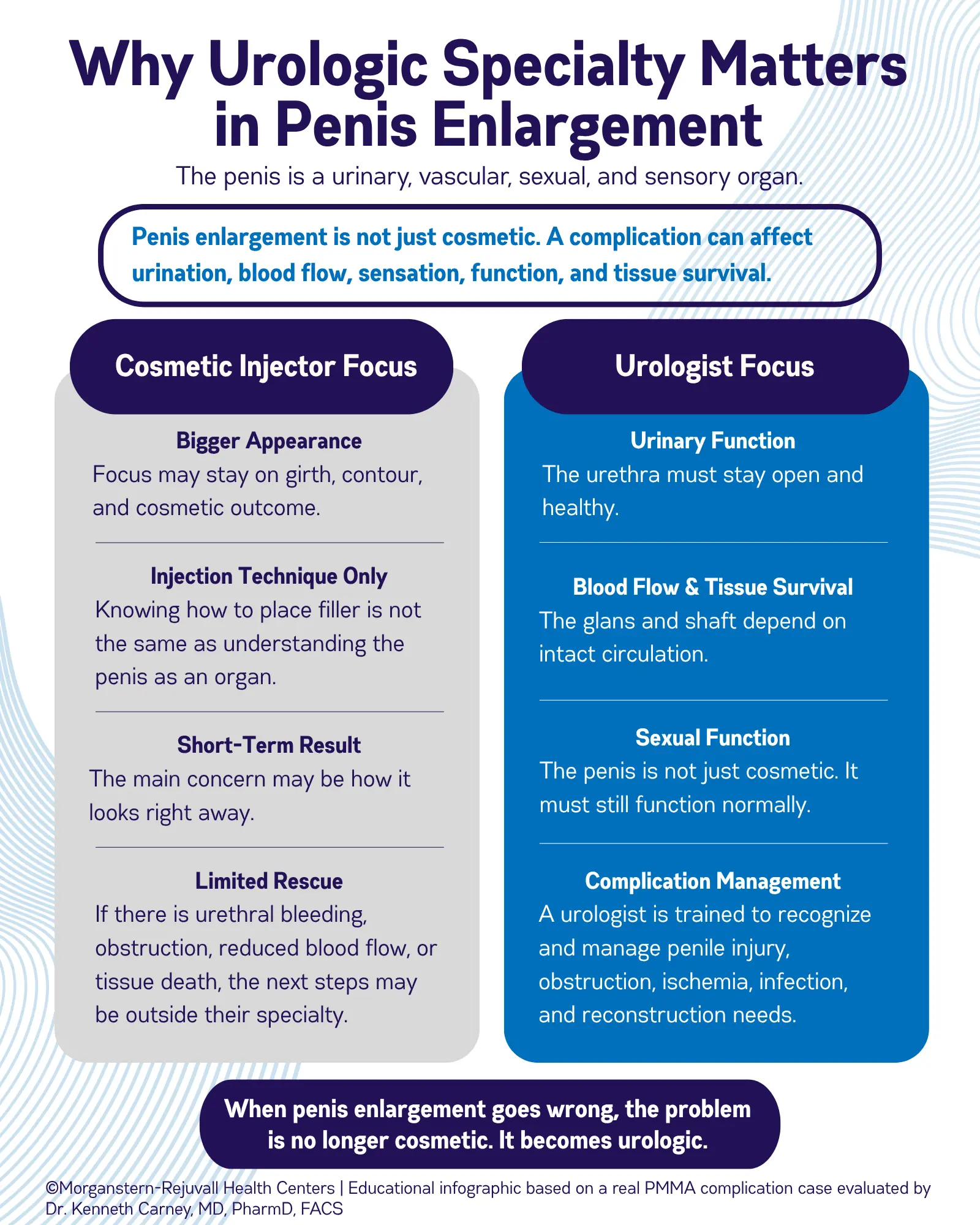
A surgeon correcting a failed penile enhancement may be dealing with foreign material, scar tissue, altered anatomy, compromised skin, migration, inflammation, vascular problems, or damage caused by a previous procedure. In many cases, several of these problems are present at the same time.
For that reason, Rejuvall believes a board-certified urologist with reconstructive experience represents the highest level of specialized training for penile enhancement and repair procedures.
What Sets a Board-Certified Urologist Apart?
Becoming a board-certified urologist requires years of medical and surgical training focused specifically on the urinary and male reproductive systems.
That training includes experience with:
- Male genital and penile anatomy
- General and urologic surgery
- Andrology and male sexual medicine
- Erectile function and vascular anatomy
- Genitourinary reconstruction
- Surgical complications and wound management
- Diseases and injuries affecting the penis and surrounding structures
This depth of training cannot be replicated by a short injection course over a weekend or by experience performing cosmetic filler procedures in other areas of the body.
Board certification also requires physicians to successfully complete the American Board of Urology certification process, including a comprehensive Qualifying Examination followed by clinical-practice requirements and an oral Certifying Examination.
Board-certified urologists must then participate in ongoing certification requirements designed to assess continued knowledge, judgment, skill, and professionalism.
Why This Matters for Penile Filler and Enlargement Procedures
Penile filler is often described as a simple injection procedure.
It is not.
Safe penile enhancement requires decisions about what material should be used, how much should be placed, where it should be placed, how penile anatomy may affect the result, and what should be done if a complication develops.
A provider must understand the penile structures beneath the injection site and how those structures interact during both the flaccid and erect states.
That knowledge becomes particularly important when complications involve:
- Vascular compromise
- Infection
- Chronic inflammation
- Nodules or granulomas
- Filler migration
- Scar tissue
- Uneven or excessive filler
- Tissue damage
- Pain or altered sensation
- Changes in erectile function
- Penile curvature or deformity
A board-certified urologist is also trained to recognize when a complication is no longer an aesthetic problem and has become a functional, reconstructive, or organ-health issue.
The Difference Becomes Even More Important When Something Goes Wrong
One of the most important questions a patient can ask before undergoing penile enhancement is:
“If I develop a serious complication, can the person performing my procedure also diagnose and surgically repair it?”
Providers without urologic or reconstructive training may be highly skilled within their own areas of practice, but penile enhancement introduces anatomical and functional considerations that are unique to the male genital system.
A provider who performs penile filler may know how to inject a product but may not have the surgical training required to remove permanent material, release scar tissue, reconstruct damaged penile anatomy, repair a failed lengthening procedure, or manage significant tissue injury.
That distinction matters.
The consequences of a complication can extend well beyond an uneven cosmetic result. In more serious cases, a patient may require complex reconstructive surgery to restore both appearance and normal function.
Penile Enhancement Is Not an Entry-Level Cosmetic Procedure
The growth of male enhancement has made these procedures increasingly available, but greater availability does not necessarily mean greater expertise.
Short courses can teach a provider how to perform an injection technique. They cannot provide the years of surgical training, anatomy education, complication management, and hands-on experience involved in becoming a board-certified urologist.
When choosing someone to perform (or repair) a penile enhancement procedure, patients should consider not only whether the provider knows how to perform the procedure, but whether that provider has the training to wholly understand the organ being treated and manage the full range of complications that may follow.
Why Choose Dr. Kenneth Carney, MD, PharmD, FACS for Complex Penis Enlargement Repair?
Complex penile enhancement repair requires a surgeon who understands not only urology, but also reconstructive surgery, penile trauma, cosmetic urology, and the management of difficult complications.
That combination of experience is what makes Rejuvall’s Chief Surgeon, Kenneth J. Carney, MD, PharmD, FACS, uniquely qualified to evaluate and repair failed male enhancement procedures.
Dr. Carney is a board-certified urologist and reconstructive surgeon with decades of experience treating complex penile and genitourinary conditions.
His background combines extensive urologic training, reconstructive expertise, trauma surgery experience, and years devoted specifically to cosmetic urology and the repair of failed enhancement procedures.
Before joining Rejuvall, Dr. Carney spent more than 20 years at Grady Memorial Hospital, a Level I trauma center, where he served as Chief of Urology.
He also held an academic appointment at Emory University and developed extensive experience managing complex urologic trauma, reconstruction, and difficult surgical complications.
His experience also includes specialized training in penile reconstructive and trauma surgery and leadership in reconstructive urologic education.
At Rejuvall, Dr. Carney has spent decades applying that background to cosmetic urology, not only performing penile enhancement procedures, but also repairing complications from procedures performed elsewhere.
That distinction is important.
A surgeon performing a repair may need to address:
- Permanent or migrated injectable material
- Extensive scar tissue
- Damaged or compromised penile skin
- Failed ligament or lengthening procedures
- Silicone implant complications
- Nodules and granulomas
- Fat-transfer complications
- Significant scrotal webbing
- Circumcision-related problems
- Penile curvature or structural injury
- Multiple complications from more than one previous procedure
Many of these cases require the surgeon to make decisions that cannot be learned from cosmetic injection experience alone.
Reconstructive Urology Meets Cosmetic Urology
Penis enlargement repair sits at the intersection of reconstructive urology and cosmetic urology.
The surgeon must understand what the penis should look like, but also how it must function.
That means preserving or restoring healthy tissue, sensation, blood flow, erectile function, mobility of the penile skin, and normal anatomy whenever possible while also improving the cosmetic result.
Dr. Carney’s background gives him experience on both sides of that equation.
He has spent decades treating serious urologic and penile problems while also developing and performing cosmetic urology procedures at Rejuvall.
This allows him to evaluate a failed enhancement from a reconstructive perspective rather than looking only at the visible cosmetic problem.
Many Repair Patients Are Referred by Other Urologists
Because of the complexity of these cases, many patients who undergo penis enlargement repair at Rejuvall are referred by other urologists and physicians from across the United States.
Other patients find Rejuvall directly after experiencing a complication and researching their repair options.
Regardless of how a patient reaches us, the process begins the same way: determining what was done, what material was used, what anatomical structures have been affected, and what can realistically be improved.
The goal is not to promise that every complication can be completely reversed.
The goal is to use Dr. Carney’s reconstructive and cosmetic urology experience to determine the safest and most effective pathway for restoring as much function, anatomy, and appearance as possible.
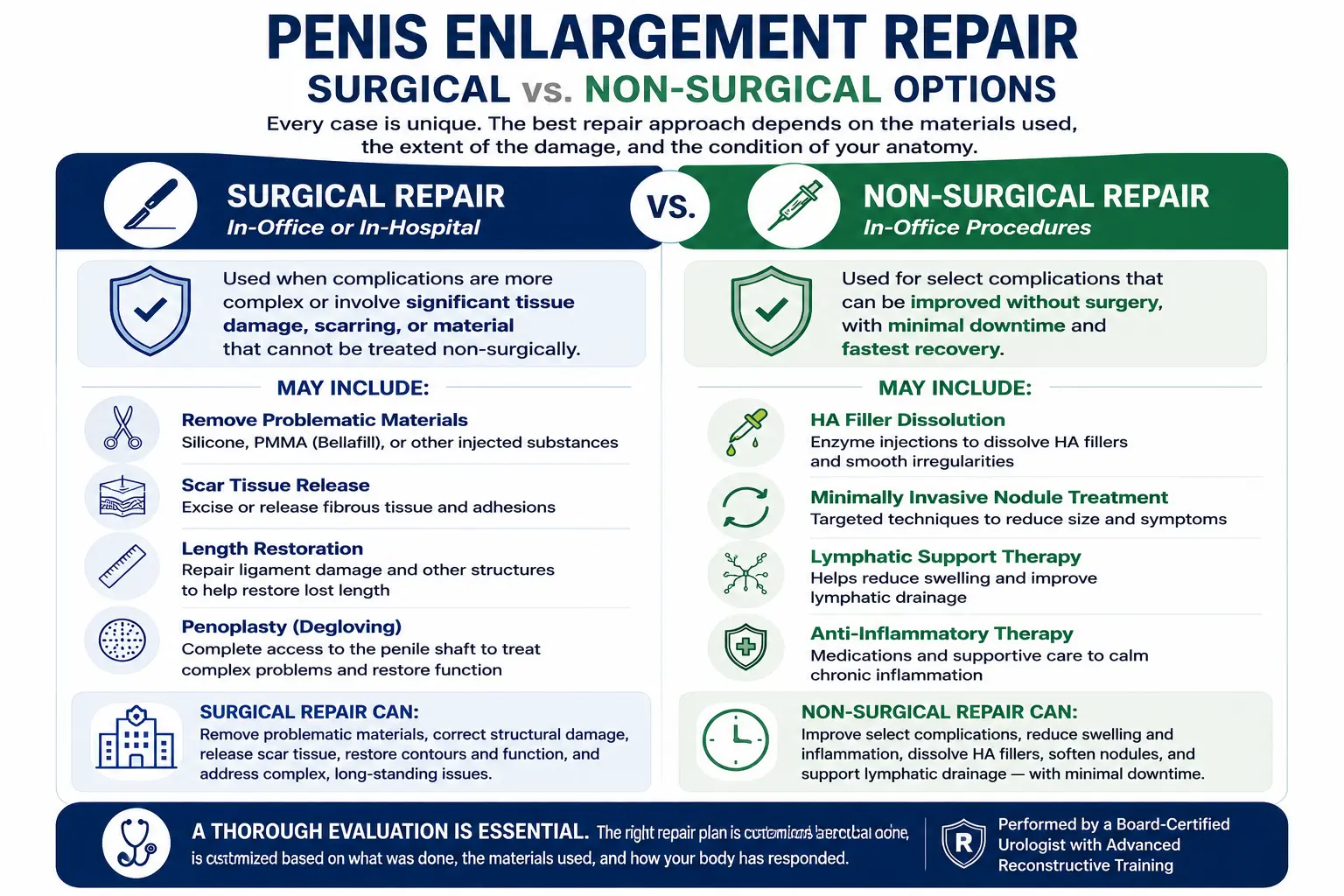
Surgical Penis Enlargement Repair
The following complications often or almost always require surgical correction, depending on their severity:
Silicone Injection Repair
Silicone tends to migrate through penile and surrounding tissues and may cause chronic inflammation, fibrosis, nodules, deformity, lymphatic problems, or significant tissue damage.
More extensive cases require removal of affected tissue and reconstructive surgery.
Excessive or Problematic PMMA Repair
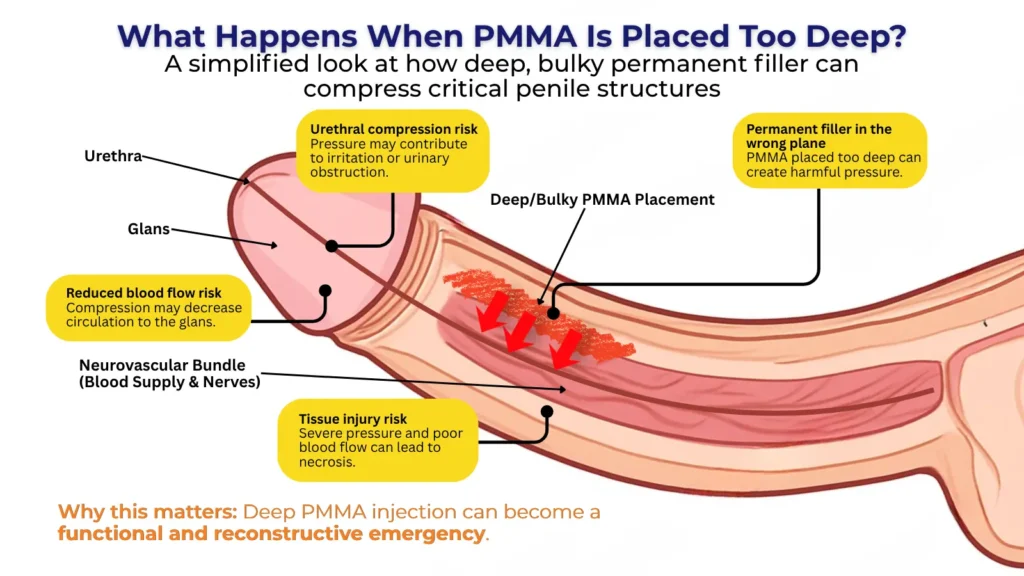
PMMA is permanent. Complications may involve excessive volume, inappropriate placement, chronic inflammatory response, irregular collagen formation, nodules, granulomas, or involvement of deeper penile structures.
Minor irregularities may sometimes be treated conservatively, while significant complications require surgery.
Failed Penile Lengthening or Ligament Surgery Repair
Patients may seek repair after losing length, failing to gain the expected length, experiencing ligament reattachment, developing scar tissue, or encountering other structural problems after a previous lengthening procedure.
Fat Transfer Repair
Fat-transfer complications may include loss of added girth, uneven absorption, irregular contours, fat migration, scar tissue, or fat-necrosis nodules.
Silicone Penile Implant Repair
Complications following silicone implant procedures such as Penuma or Himplant may include scar tissue, deformity, pain, loss of length, altered anatomy, or other problems that remain after the implant has been removed.
Scrotal Webbing Revision
Previous enlargement procedures, circumcision, or other surgery can sometimes create or worsen significant penoscrotal webbing. More extensive cases require surgical reconstruction to restore a more natural separation between the penile shaft and scrotum.
Major Circumcision Revision
Significant circumcision problems involving excess or insufficient skin removal, scar tissue, painful erections, frenulum problems, altered penile shape, or associated webbing require surgical correction.
Severe Nodule or Granuloma Repair
Large, deeply positioned, numerous, or inflammatory nodules and granulomas may need to be surgically removed when less invasive treatment is not appropriate.
6 Common Penis Enlargement Disasters We Repair
The most common penile enlargement complications we treat tend to involve unsafe injectable materials, overly aggressive filler use, failed surgical techniques, or procedures performed without sufficient understanding of penile anatomy and function.
The penis is not simply another cosmetic treatment area. It is a complex vascular organ with delicate skin, nerves, blood vessels, erectile structures, lymphatic pathways, and tissue planes that must continue functioning together normally.
When those structures are disrupted, the result becomes much more serious than an uneven cosmetic outcome.
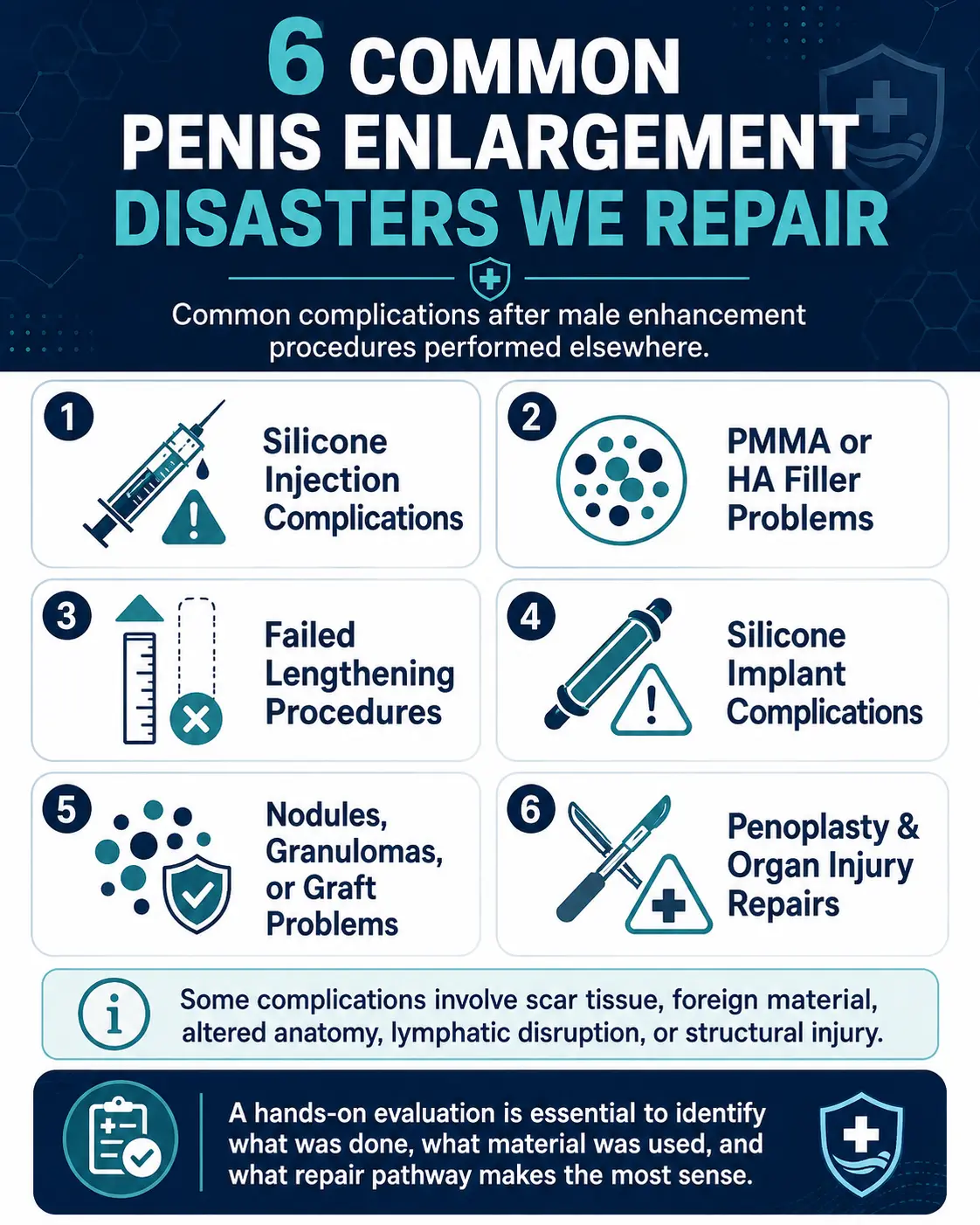
1. Silicone Injection Complications
Silicone injection complications are among the most serious repair cases we encounter.
Silicone injected into the penile shaft, glans, or scrotum tends to migrate, trigger chronic inflammation, create fibrosis, form nodules or granulomas, interfere with normal tissue movement, and damage surrounding structures.
Severe cases require extensive surgical removal and, in most situations, hospital-based treatment.
2. Excessive or Improperly Placed PMMA or HA Filler
Problems may include unevenness, excessive volume, migration, nodules, granulomas, chronic inflammation, fibrosis, or filler placed in an inappropriate tissue plane.
The repair pathway varies depending on the product used, because HA can sometimes be dissolved while PMMA is permanent and requires a more complex approach.
3. Failed Penile Lengthening Procedures
Failed penile lengthening procedures leave patients with:
- Loss of previously existing length
- Failure to gain the expected length
- Ligament reattachment
- Scar tissue
- Altered penile position
- Pain or structural problems
Repair requires identifying exactly what was done during the original procedure and determining whether the anatomy can be surgically restored or improved.
4. Silicone Implant Complications
Some men develop problems following silicone penile implants such as Penuma or Himplant.
Complications may include scar tissue, deformity, pain, altered anatomy, loss of length, or other structural changes that remain even after the implant itself has been removed.
Repair, therefore, involves much more than simply removing the device. In some patients, the surrounding tissue and anatomy must also be reconstructed.
5. Penile Filler Nodules, Granulomas, Fat Transfer, and Graft Problems
We also treat patients with:
- Fat-necrosis nodules
- Loss of girth following fat transfer
- Uneven fat absorption
- Fat migration
- Irregular penile contours
- Dermal graft degradation
- Graft unevenness
- Nodules or granulomas caused by injected materials
Minor problems can sometimes be treated without major surgery, while more extensive or deeply involved complications require surgical correction.
6. Penoplasty and Penile Organ Injury
Some enlargement complications do not fit neatly into one category.
These cases may involve significant scar tissue, structural damage, altered penile anatomy, chronic pain, loss of size, erectile curvature, or injury to the penis itself.
We often categorize these more complex reconstructive cases as penoplasty or penile organ repair.
In some patients, trauma from a failed enhancement procedure may also contribute to fibrotic plaque formation and curvature similar to Peyronie’s disease.
A Special Concern: Filler Injected into the Scrotum
One example of how poorly understood male genital anatomy can lead to serious complications is the use of injectable fillers to enlarge the scrotum.
The scrotum does considerably more than simply hold the testicles. It contains an important network of lymphatic vessels involved in fluid drainage and filtration from the lower body.
At Rejuvall, we consider this anatomy particularly important when evaluating the safety of injecting foreign substances into scrotal tissue.
Introducing filler or another foreign material into this region can interfere with normal lymphatic drainage and potentially contribute to persistent swelling, inflammation, tissue changes, and other long-term health problems.
The lymphatic system also plays an important role in immune function and in filtering substances the body needs to eliminate.
Because disruption of normal lymphatic function has been associated with serious disease processes, including cancer-related conditions, Rejuvall considers unnecessary interference with these structures to carry potentially significant long-term health concerns.
For that reason, injecting foreign material into the scrotum solely to increase its size is a procedure we believe should be approached with extreme caution.
Why These Repairs Can Become So Complex
The common thread in these cases is that the original problem may extend far beyond what is visible from the outside.
A cosmetic irregularity may actually involve scar tissue, foreign material, damaged skin, altered lymphatic drainage, fibrosis, structural injury, or changes beneath the surface that cannot be evaluated from a photograph alone.
That is why the repair process begins with identifying exactly what happened before deciding how (or whether) it should be corrected.