
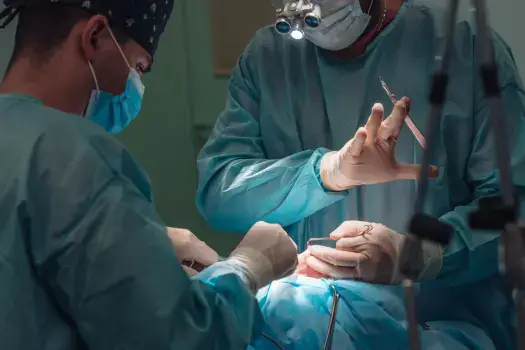
closeup of two surgeons in scrubs and surgical gear performing penis enlargement surgery

The Ultimate Guide to Penis Enlargement Surgery

Quick answer: Penis enlargement procedures can improve girth, visible length, or both, but they work by changing appearance—not by “growing” new penile organ tissue. Depending on your anatomy and the technique used, some procedures mainly increase flaccid visible length (for example, tissue release/repositioning or suprapubic fat pad reduction), while others focus on girth by adding volume under the penile skin (such as hyaluronic acid fillers or other clinician-guided options). The safest first step is an evaluation with a board-certified urologist who can explain what’s realistic for your goals, what risks and downtime to expect, and what the revision pathway looks like if complications occur.

Table of Contents

Penis enlargement surgery is any procedure to make your penis appear bigger. Surgery is just one way that people may try to do this.

Most men approach the idea of a penis enlargement with the thinking that “women get breast enlargements; I want a penis enlargement” – since males tend to equate those two body parts. However, they couldn’t be more dissimilar.

A penis is not a sebaceous gland or layers of fatty tissue like the female breast or buttocks.A penis is a vascular organ with complex anatomy and function. Unlike cosmetic procedures that add volume to soft tissue (such as facial fillers), there is no simple way to “grow” new penile organ tissue for cosmetic enlargement.

Close-up of a human eye illustrating that organs cannot be safely “grown” larger on demand.

Today, doctors cannot reliably create new penile organ tissue on demand for purely cosmetic enlargement. Most procedures change appearance by repositioning tissue, improving exposure, or adding volume. You can’t go to a doctor and have your eyes 30% larger, or your kidney 20% larger.

Because there is no single ‘perfect’ way to enlarge the penis for every patient, there is no perfect approach to execute a penile enlargement surgery. Since the ideal solution does not exist, each option has pros and cons.

So, if you choose to try penile augmentation, learn the pros and cons associated with each version. Choose an approach where the potential benefits match your goals — and where you clearly understand the risks, limitations, and aftercare required.

What is a penis enlargement procedure?

A penile enlargement procedure is any surgical or non-surgical medical approach that causes the penis to become larger. Some are intended to last a lifetime, while others are temporary, allowing a guy to “test drive” a larger size before deciding what is ideal for him.

Some people choose man-made thickening agents or implants, while others choose a natural alternative. Some methods promise enhanced length, some merely increased thickness, and a few increase both.

Furthermore, age and personal health variables influence which possibilities are open to each man. Total costs and recuperation time also influence the decision.

Start your penis enlargement surgery journey with research

There is only one penis in every man’s body. Take your time while completing research. As a clinic that evaluates complex penile enhancement complications and revisions, we regularly see men who were not fully informed about risks, materials used, or the revision pathway.

What is the most common reason for failure, according to the patients we’ve treated? The most common theme is, “I went to the first clinic that told me what I wanted to hear.”

Screenshot of a patient discussion forum used to research penile enhancement experiences and timelines.It is not always easy to do research. Unfortunately, many penis enlargement “reviews” are purchased and paid for in a similar manner to certain Amazon products. You’ll have to delve a little deeper to find the answers you need.

The PhalloBoards is a well-known patient forum where men share experiences and compare outcomes. If you use forums for research, look for detailed timelines, photos when available, and posts that discuss both pros and cons — not just hype.

Start your research at the PhalloBoards.

Taking time to research can reduce the chance of surprises later.

How is a penis enlargement procedure performed?

There are different types of procedures used to make penises appear bigger. However, there are very few methods that you’ll most commonly encounter when it comes to increasing penile length and width.

Is penis enlargement surgery a good option for men?

Measuring tape illustrating clinical discussion of micropenis and treatment candidacy.Most healthcare providers do not recommend penis enhancement surgery for cosmetic reasons, with the exception of micropenis cases.

Most of the surgical techniques described below are performed to correct micropenis or other conditions such as buried penis, Peyronie’s disease, congenital defects, or cancer-related deformities.

The construction, reconstruction, or modification of the penis is clinically referred to as a phalloplasty.

These are the most common forms of phalloplasty:

  • Free fat grafting (FFT) starts with the extraction of fatty tissue from elsewhere in the body. The tissues are centrifuged (spun at a high rate) to break up the cells and are then injected into the penis. Because 20% to 80% of the fat cells will be reabsorbed by the body in the first year, multiple procedures may be needed. This variant is rarely used by leading augmentation surgeons today.
  • Dermal fat grafting (DFG) involves the extraction of a patch of skin from the patient’s body along with a layer of fat. After the skin is removed from the penis, the extracted tissue is grafted in its place. Because the extracted skin is thicker, it will increase the circumference of the penis. The shortcoming of dermal grafts is the limited amount of increased thickness that can be achieved from such an extensive surgical procedure. It can only be performed once. 
  • Ligament Release or Ligamentolysis: The suspensory ligament that connects your penis to your pubic bone is surgically cut. The concept behind this procedure is that the flaccid penis will subsequently hang longer but studies show very few men see increased length from this dated procedure.
  • V-Y plasty is now the most common surgical procedure for increasing penile length. During this procedure, the ligament that anchors the penis to the pelvic bone is severed, releasing the shaft of the penis and allowing it to extend forward. Congruently, the pelvic area skin is repositioned downward to lower the profile of the penis and create a longer appearance. While effective at elongating the penis, it also makes the penis less stable when erect.
  • Suprapubic lipectomy primarily is performed on overweight people for whom weight loss has not improved the appearance of a buried penis. Suprapubic lipectomy involves lifting the pelvic skin to expose the underlying penis. The procedure is relatively safe; the side effects are limited to postoperative pain, bleeding, or infection.
  • Sliding elongation is sometimes used in those who have experienced a shortening of the penis due to Peyronie’s disease. The procedure involves severing scarred tissue surrounding the shaft, allowing the penis to straighten and lengthen. Although the surgery does not involve any grafting, nerve injury and long term complications are possible.
  • Penile disassembly is a much more invasive form of sliding elongation surgery in which the shaft is completely severed just below the head of the penis. The gap is then filled with a section of rib cartilage. While less commonly used, the surgery can be effective for individuals with micropenis, congenital defects, or deformities resulting from penile cancer. Along with an extended recovery, lost penile sensation and erectile dysfunction are significant risks. 
  • Penile implants are generally reserved for individuals with severe erectile dysfunction as they do nothing to make the penis bigger. With that said, they are sometimes used with V-Y plasty, sliding elongation, or penile disassembly to help stabilize the penis and increase girth. However, implants for cosmetic urology are prone to infections given the vigorous nature of how the penis is employed during sexual activity.
  • Penis enlargement using dermal fillers: A physician injects an FDA-approved cosmetic filler under the skin of the shaft of your penis (subcutaneously) to increase girth. Some of these are safer than others.
  • Penis enlargement surgery transplanting adipose fat cells: A healthcare provider removes fat using liposuction, then injects that fat into your penis to increase the circumference. Advances in the filtration and purity of extracting cells has improved outcomes with this procedure by the most skilled providers.
  • Monsplasty: surgical removal of the suprapubic fat pad: In this case, the fatty tissue surrounding the penis is surgically removed for men with a full or partial “buried” penis. This procedure doesn’t increase the size of your penis but reduces the size of the tissues around it to reveal the true length of the penis.
  • Surgical implantation of an implant sleeve (subcutaneous sleeve implant): In this approach, a manufactured sleeve implant is placed under the shaft skin to increase thickness. A major drawback is that if the implant becomes infected, uncomfortable, or must be removed, men can end up with less usable size than they started with because of scarring and tissue changes.
  • New Breakthrough Penile Enlargement Surgery Procedures: Fortunately, there have been recent breakthroughs that offer guaranteed size improvements. These are covered in the next section.

Future Penile Augmentation Breakthroughs

The future of penile augmentation is full of promise, with cutting-edge research and technology paving the way for groundbreaking advancements. From innovative surgical techniques to regenerative medicine and tissue engineering, upcoming breakthroughs aim to make procedures safer, more effective, and tailored to individual needs.

These developments hold the potential to further revolutionize penile augmentation, offering men new opportunities to enhance their confidence and well-being.

Penile Lengthening Breakthroughs

A group of researchers led by Kenneth J. Carney, MD, PharmD, FACS have been working to develop a novel penile surgical lengthening procedure where even more of the inner penis surgically repositioned outward through test procedures upon human cadavers.

The most optimal patients for this new breakthrough would need to be uncircumcised as the amount of available penile shaft skin usually becomes the limiting resource for these more significant increases in penis length.

The group continues to develop and refine this novel procedure and hope to begin offering options for patients in 2026.

Concept illustration of bioartificial organ manufacturing and tissue engineering in regenerative medicine

Bioartificial Organ Manufacturing Technologies

Lots of men overlook the fact the penis is a human organ like the heart, eyes, kidneys, etc. To date, medical science is unable to create new human organ tissue, but that technology is continuing to advance.

The holy grail for major future innovation with cosmetic urology lies in the medicine’s ability to create new human organ tissue.

Organ manufacturing, in its broadest sense, refers to any technique that produces organ substitutes (i.e., artificial organs) from any available materials, such as polymers, cells, metals, and so on.

Organ manufacturing can be defined as “the production of bioartificial organs using living cells (such as multiple adult cells and stem cells), along with other biomaterials (such as polymers, growth factors, bioactive agents, or biochemical signals), and some advanced processing technologies.”

Like nuclear power plant construction, organ manufacturing is a dynamic transformation process that has the fundamental properties of life, including a sequence of physical, chemical, and biological modifications to cell-based biomaterials.

These technologies are a set of enabling approaches for creating bioartificial organs based on bionic principles. They address the physical, chemical, biological, and pathological clinical alterations of various biomaterials, such as cells, cell-laden polymeric hydrogels, and bioactive substances.

One of the primary goals of organ manufacturing technologies is to create bioartificial organs that can partially or completely repair or restore failing or malfunctioning biological organs.

One of the distinguishing properties of organ production is that the end products are live organisms with at least two different cell tissue types.

It will likely be a very long time before affordable growth of the penis organ will be available for cosmetic urology, but it’s coming in the future!

Penis Enlargement: Surgical vs Non-Surgical Procedures

Surgical and non-surgical enlargement techniques provide distinct benefits based on a patient’s health status, body configuration, and priorities. Non-surgical penis enlargements are an excellent approach to begin your journey with male enhancement.

However, because of the lower cost of providing such procedures, they have become a space where misleading marketing and inconsistent standards are common.

As previously stated, we strongly advise each patient to conduct some research at the Consumer Reports of Penis Enlargement: The PhalloBoards.

Non-Surgical Penile Augmentation

Illustration representing non-surgical penile injection treatments offered in the United States.Non-surgical penile enhancements have become incredibly popular around the US in recent years.

To enhance the penile girth, a bulking substance is added to the subcutaneous tissue layers around the penile organ. As a result, vascular flow deficiencies have no direct impact on them.

What has been added remains even after several hours of swimming.

Benefits of Non-Surgical Penis Enlargement

Medical diagram of penile anatomy showing skin, subcutaneous layer, erectile tissue, and urethra.

The key benefits of dermal filler versions for non-surgical enlargement are fast recovery, minimal swelling, little or no missed time at work, no cutting, and no anesthesia.

Additionally, you can be a cigarette smoker, be diabetic with an elevated A1C, have a heart condition – you name it. Almost every man is a candidate for a non-surgical dermal filler enhancement.

Additionally, non-surgical enlargements are almost always the most affordable enlargements, at least at the onset. They eliminate the costs for anesthesia and reduce surgeon, staffing, and facility costs.

Who shouldn’t get a non-surgical penis enlargement?
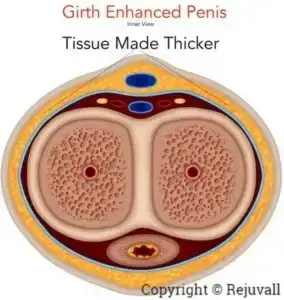
Diagram showing the subcutaneous placement zone used for penile girth enhancement procedures.The only men not well suited for non-surgical dermal fillers are those with an engorged supra pubic fat pad where a portion of the penis shaft is buried within the enlarged pad, and men diagnosed with micro penis.

With the former, the penis will usually end up half its present length because the added girth will cause the penis to retract further into the fat pad.

Adding girth to a micro penis makes it appear visibly shorter because of the change in proportion. We strongly suggest micro-penis patients first get a lengthening procedure and complete all the associated aftercare to optimize their case before considering added thickness.

Non-Surgical Penile Girth Enlargements Available In the US

Concept image warning about unqualified injectors and unsafe marketing in penile enhancement.
One version is extremely harmful and risky, whereas the other two are fairly safe.
SAFE: Hyaluronic acid Injections

Off-label injections of FDA-approved hyaluronic acid into the subcutaneous skin layers surrounding the penis organ are typically the safest and most popular penile girth enhancement technique in America.

Hyaluronic acid, a naturally occurring molecule, is a glycosaminoglycan polymer made up of alternating residues of the monosaccharides d-glucuronic acid and N-acetyl-d-glucosamine, which form a linear chain. Hyaluronic acid, in its pure state, is identical in all organisms and is not species or tissue specific.

Hyaluronic acid, a key component of the extracellular matrix, is found in many human tissues, including the skin, eyes, connective tissue, and synovium.

Hyaluronic acid’s highly anionic properties allow it to draw water, causing it to swell and produce volume while also providing structural support. Aging causes a decrease in hyaluronic acid and collagen formation in the skin.

Overlying wrinkles develop as the skin loses its viscoelastic characteristics. Hyaluronic acid dermal fillers work to combat aging by replenishing lost volume.

In addition, hyaluronic acid fillers have been demonstrated to stimulate collagen formation and alter fibroblast morphology.

Man-made hyaluronic acid has been used in a variety of cosmetic treatments with great success rates. Importantly, H/A injections are reversible by injecting an enzyme called hyaluronidase. Injecting this enzyme dissolves hyaluronic acid particles.

Clinician drawing medication into a syringe under sterile conditions for an injection procedure.

Unfortunately, this increased demand has resulted in a huge number of self-proclaimed penis enlargement “expert doctors” with only a few weekend classes in topic training (as opposed to the six years of medical residency required to become a board-certified urologist), resulting in countless suboptimal outcomes.

Fortunately, these unfavorable results are reversible with a few injections of diluted hyaluronidase.

The disadvantage of H/A injections is that the increased size is not permanent, which is what so many men want. They require ongoing injections to maintain their enhanced thickness.

On a positive note, hyaluronic acid injected into the penile shaft lasts significantly longer than that injected into the facial area since the greater doses utilized for penile augmentation prevent enzymatic breakdown of the filler.

RELATIVELY SAFE: Bellafill® PMMA Injections

Off-label injections of Bellafill® PMMA are another popular non-surgical penile girth augmentation treatment in the United States since the increased size is mostly permanent.

Bellafill® is a PMMA microsphere dermal filler with FDA approval for specific dermatologic uses in the United States, and penile use is performed off-label. In Rejuvall’s experience, when used appropriately and conservatively, PMMA-based girth enhancement can be long-lasting—but the most important safety issue in today’s marketplace is product verification, because some injectors market “PMMA” or even “Bellafill” while refusing to provide documentation that proves what was actually injected.

Polymethyl methacrylate (PMMA) microspheres, the active ingredient in Bellafill®, are a synthetic substance. PMMA acts as a structural support for the skin, similar to scaffolding for a structure, holding it up and filling in any lost volume.

Microsphere-style illustration representing particulate dermal filler structure used for volume support.Bellafill® microspheres are between 30 and 50 microns in diameter. Uniform microspheres larger than 20 microns are considered too large to reabsorb or disintegrate when swallowed as part of regular human metabolic activity.

In our experience, PMMA-based enhancement can be long-lasting. However, outcomes vary based on product verification, injection technique, total volume, and how conservatively treatment is staged.

If you proceed with PMMA-based enhancement, follow your clinician’s aftercare instructions closely and avoid excessive friction during healing.

The primary disadvantage of using Bellafill® PMMA injections for cosmetic urology is a higher risk of granuloma, which can be palpable and/or visible.

A granuloma is a small collection of white blood cells and other tissues. They arise as a reaction to the inflammation that occurs after injection. This is especially undesirable because such granulomas can resemble other lumps or lesions, which can be alarming and may require evaluation.

Thought leaders strongly recommend moving slowly with the amounts of PMMA injections administered in a single session to reduce this inflammatory risk. Granuloma and Bellafill® are permanent and require minor surgical incision to remove or repair.

Surgical Penile Augmentation

Benefits of Penis Enlargement Surgery

The degree of size improvement that can happen quickly is the main advantage of penis enlargement surgery over non-surgical methods. This is particularly true for guys who have gained weight and lost penile size.

What men are good candidates for penis enlargement surgery?

Healthy, nonsmoking men between the ages of 24 and 62 who have no history of organ transplants, no contraindications to anesthesia, and an A1C of less than 7 (if diabetic) are usually the best candidates for penis augmentation surgery.

The results of male enhancement procedures are generally better for those who have never had one before. Males with Peyronie’s disease, severe anxiety disorders, or a history of penile implant surgery should not have enhancement surgery.

What men will likely be disappointed with outcomes from penis enlargement surgery?

Medical device illustration representing implant-based penile procedures and related revision risk.
Patients who have had an implant-based augmentation in the past.

Patients who have previously received a sleeve implant for penile enlargement that failed and had to be removed often face challenging conditions.

Patient consultation with clinician to evaluate prior penile procedure history and current symptoms.
Patients who have had a previous penile lengthening procedure.

Surgeons never really know what they’re getting into in these situations.

Even when a patient describes what happened in the past, it does not always match what is found on the inside.

Prior procedures that didn’t go well almost always mean there’s scar tissue in the man’s body. Thus, the primary objective is usually to restore the initial size. If more can be achieved? That’s usually a bonus.

What men are NOT good candidates for male enlargement surgery?

Portrait representing age-related factors considered during surgical screening for penile procedures.
Patients over the age of 62.

Most men are aware that as they age, their penis shrinks. The pliability of the sponge-like property of the corpora begins to decline after the age of 60, regardless of physical fitness.

While exceptional surgeons have successfully added more than an inch of length to men as old as 80 years old, this is extremely rare. The reduction in regenerative repair in human bodies after the age of sixty makes surgical options less appealing for these individuals.

Medical illustration of hypospadias types used in reconstructive urology education.
Centers for Disease Control and Prevention, CC0, via Wikimedia Commons
Patients who have congenital penile defects such as hypospadias or congenital curvature (chordee).

With hypospadias operations, doctors can only do so much for these patients. Certain cases of hypospadias require inpatient treatment and are not suitable for outpatient augmentation clinics.

The most common treatment for congenital curvature is a plication operation, which causes the penile length to be lost. Cosmetic urological methods cannot restore it.

Playful food illustration used to introduce discussion of penile curvature and Peyronie’s disease.
Patients with Peyronie’s disease.

Patients with decreased girth or curvature do not benefit from penile enlargement surgery because of the fibrosis and scar tissue in the penis’ soft tissues.

Penile trauma can cause Peyronie’s fibrosis to variable degrees. Penile enlargement surgery has the potential to make existing problems worse.

Diagram of an inflatable penile prosthesis system used to treat severe erectile dysfunction.
Copyright Mayo Foundation for Medical Education & Research
Patients who have had a penile prosthesis implanted in the past to address severe erectile dysfunction.

After having a penile prosthesis installed for erectile dysfunction, there is nothing that can be done to increase length.

The inner tissue becomes encapsulated around the implanted prosthetic and cannot be changed. If any length were somehow added, it may compromise rigidity and functional performance.

Common Questions & Answers About Penis Enlargement Surgery

A surgeon wouldn’t be able to cause your penis to point straight downward even if you requested that.

Medically, it is not possible.

The urban legend “pointing straight down” was made up by cosmetic surgeons who are not board-qualified and hence cannot perform penile lengthening procedures.

Adipose tissue seems to have been injected by your surgeon to help support the extra length.

Within 90 to 120 days of the procedure, fat tissue that has been transplanted to this area of the penis deteriorates and dies.

A skilled surgeon can usually improve your length unless your lost size is because of an abundance of scar tissue from the earlier procedure. If that’s the case, regaining you initial size is a win!

A surgeon will need to evaluate you in person to best advise your options.

Micro-penis is commonly confused with a reduction in penile size caused by weight gain or vascular/erectile dysfunction concerns.

Everything in the micropenis is smaller (both inside and outside), so we have a lot less organ tissue to work with right away. The top surgeons can typically achieve an extra inch of length from a micropenis, but results vary.

Patients who have gained weight and have an engorged fat pad should consider surgery to reduce the suprapubic fat pad, lower stomach reduction and contouring, or lengthening surgery.

If a practitioner merely conducts lengthening on these patients without reducing and contouring the fat pads, the lengthening will be limited, if at all.

No — in most cases, it’s not a good idea, especially when it’s being pitched as a “simple add-on” to maintain length.

A spacer implant means leaving a permanent manufactured device in or near the penis to try to hold a lengthening result in place. The problem is that the penis isn’t a static body area. It’s a highly vascular organ that changes size, firmness, and shape constantly with daily movement, erections, temperature shifts, and sexual activity. Over time, that environment tends to magnify the risks of any implanted foreign material.

The biggest concerns we see with spacer-type approaches are:

  • Infection risk (and if an implant becomes infected, removal is often the only solution)
  • Scar tissue / capsular reaction, which can change appearance and feel and may compromise the original benefit
  • Discomfort, tethering, or unnatural mechanics during erections and sexual activity
  • Hard-to-fix revision scenarios if the outcome isn’t acceptable (repairs can be complex and expensive)

If you’re evaluating a lengthening option, the safest “due diligence” step is to focus less on the sales promise (“it helps maintain length”) and more on the fundamentals:

  • What exactly is being placed, and where?
  • What’s the long-term plan if there’s a problem? (Not “we’ll take care of you,” but what procedure and what cost/setting.)
  • Who is doing it? Penile lengthening is not a med-spa category. If it involves surgery or implants, you want a board-certified urologist, ideally with reconstructive experience, because complications aren’t theoretical — they’re predictable enough that the provider’s ability to manage them matters as much as the initial result.

Penis Enlargement Surgery Cost

Stethoscope and piggy bank illustrating cost considerations for penile enlargement surgery.

How much does penis enlargement surgery cost?

Penile augmentation surgery in the United States ranges from $3,000 to $40,000, depending on the precise technique required to get the desired results.

The cost of penis enlargement is primarily determined by:

  • the time required for the exact procedure
  • facility costs
  • anesthesia
  • materials
  • credentials
  • malpractice insurance
  • guarantees
  • local operating costs
  • patient health and age
  • procedure reversibility
  • any level of requested patient catering services

Penis enlargement is a cosmetic technique (like breast augmentation), hence it is classified as elective surgery. As a result, insurance does not cover any part of male enhancement therapy.

Health insurance will cover some aspects of hospital operations for severely obese men to help with urine function, but not anything related to increasing or restoring penile size. Depending on the surgery, hospital procedure co-pays and other fees might range from $20,000 to $80,000.

Tips for Evaluating the Cost of Penis Enlargement Surgery

Balance scale graphic comparing price versus value when evaluating penile enhancement options.Price and expense factor into everyone’s decision to improve. However, keep in mind that “value” is defined by what you really receive, whereas “price” is the amount you spend. In actuality, the majority of guys seeking an enlargement want a certain result.

A successful enlargement necessitates a clear understanding of what you want (and, if necessary, adjusting your lifestyle or health to achieve it), as well as a focus on safety.

The PhalloBoards, a patient-driven website, is the most trusted source of accurate information on penis enlargement. PhalloBoards is often referred to as the “Consumer Reports” for male enhancement. It is private, free, and, most importantly, TRUTHFUL.

Move slowly. Don’t let any clinical agent or sales representative hurry you into deciding. Every boosting process has “pros and cons” in the world. If the operation you’re considering seems too good to be true, you’re probably dealing with clinical fraud.

What actions can men take to lower the cost of penis enlargement surgery?

Clinician image representing budgeting and planning for elective urology procedures.If you want to gain penile size but have a BMI of 35 or higher and have $5,000 to spare, it’s unlikely you’ll be unable to find viable solutions.

It is sometimes possible to locate someone who will “tell you what you want to hear,” but you will almost certainly find yourself in a worse situation than when you started.

In this instance, your best chance would be to spend some money on a personal trainer or a gym membership to improve your fitness and diet, which would gradually lead to more cheap solutions.

If you smoke two packs of cigarettes each day and wish to achieve natural, long-term penile thickness or length, it’s time to stop. To explain, injectable, non-surgical dermal fillers allow you to continue smoking while expanding your waistline.

What are the factors that most affect the price of penile enlargement surgery in the United States?

The 12 main cost drivers that influence price differences are the time it takes to perform your specific procedure, facility expenses, anesthesia, materials, credentials, malpractice, guarantees, local operating costs, patient health and age, procedure reversibility, and patient catering and care services.

A summary of these key cost categories is presented below, along with more information on each.

1. Time: How long does it take to complete your procedure?

The anticipated time required to complete your surgery is typically the most significant single cost driver.

That’s because it directly influences the cost of your surgeon, anesthesiologist, facility use, supporting surgical personnel, and other associated expenses.

Alarm clock representing time requirements for procedures, recovery, and aftercare.

2. Facility Requirements for the Procedure

It goes without saying that converting an outdated clinical exam room into a temporary place for penile enlargement procedures is less expensive than hiring a professional institution.

To ensure patient safety, a high-quality procedure space will have everything from emergency backup power in the event of an unexpected power failure to room air that is changed twelve times per hour to assist maintain a germ-free environment.

Modern operating room illustrating facility standards for safe surgical procedures.

3. Anesthesia

If anesthesia is required, the cost of your procedure will rise. Depending on the duration of the therapy and the type of anesthesia utilized, the cost might range from $2,000 to $5,000.

These expenditures are heavily determined by a patient’s medical history and current state of health.

4. Insurance for Malpractice

Most patients surely believe that all doctors have malpractice insurance. Enlargement clinics are now operating in jurisdictions like Florida, where healthcare providers are not required by law to have malpractice insurance.

The aforementioned situation has financial repercussions and clearly puts patients at danger.

Document and stethoscope illustrating the importance of malpractice coverage and credentialing.

5. Required Resources

The price of FDA-approved dermal fillers can significantly raise the cost of non-surgical dermal injection procedures.

The FDA must approve or clear any manufactured product that is swallowed, injected, or implanted into the human body. If any of these items are required for your augmentation, such as with length and girth enhancement surgery, the cost will increase.

The increase in men receiving unapproved “permanent filler” injections marketed with phrases like “collagen-building,” “permanent,” or even “PMMA,” has added significant downstream costs to repair surgery.

In many of these cases, the problem is not just technique—it’s misrepresentation of what was injected. When the injected substance is not what a patient was told, complications can be harder to predict, harder to treat, and more expensive to repair.

If a clinic claims they are using PMMA, patients should know that Bellafill® is the only PMMA dermal filler with FDA approval in the U.S. (for specific dermatologic indications), and penile use is off-label. Patients should insist on product verification (box/label), documentation, and traceability (lot number)—not marketing promises.

Vials representing regulated medical products used in injectable procedures.

6. Board Certified Urological Expertise

Costs are determined by the level of expertise necessary to complete a specific procedure. Naturally, a simple medical operation that can be performed by a general practitioner (GP) or physician’s assistant (PA) will be less expensive than one that requires a board-certified surgeon.

It is crucial to avoid “self-described” surgeons who use marketing lingo to exaggerate their level of experience.

Our penile enlargement repair treatments are increasingly being conducted on patients who thought they were seeing a surgeon but were instead seeing a general practitioner, esthetician, or another less educated expert.

Because state medical boards do not recognize this specific licensed categorization, these operators’ self-identification as “cosmetic surgeons” is the most visible sign.

The term was first used by estheticians who perform injectable cosmetic operations. Many members of the general public confuse the words “cosmetic surgeon” with “plastic surgeon.” Because of this misunderstanding, these individuals utilize this alias.

Cutting back on “expertise” may save you money in the short term, but it may cost you dearly in the long run.

Urologist in a clinical setting highlighting specialty training in genitourinary anatomy and surgery.

7. Local Operating Costs

Clinic and surgical facility operating costs might vary greatly between states and municipalities. Labor costs, material costs, rental costs, and medical legislation differ significantly across states and municipalities, influencing the cost of healthcare services.

Map graphic showing how location affects surgical pricing and facility costs.

8. Patient's Age & Personal Medical History

A patient’s eligibility for a safe and reasonably priced outpatient ambulatory procedure may be determined by their age and medical history, which may influence associated costs.

Completing necessary treatments in a hospital raises prices dramatically.

Medical history intake form used to screen candidates for anesthesia and surgery.

9. Reversibility: Costs & Hazards

Patients should be properly informed about the dangers connected with obtaining a reversible state, as well as the financial consequences of reversing a problematic procedure.

We strongly advise anyone considering penile enlargement therapy to review the “Consumer Reports of Penis Enlargements,” popularly known as “The PhalloBoards,” for practical information on probable complications and reversibility issues.

U-turn symbol representing reversibility planning and complication management pathways.

Non-Surgical Penile Lengthening

There are a small number of structured, clinician-guided non-surgical length protocols that have published data and defined aftercare requirements.

Both versions listed below regularly add up to an inch of penile length without surgery.

Rejuvall MAXL® Non-Surgical Lengthening

Invented by urologists Steven L Morganstern, MD and Kenneth J. Carney, MD, Pharm, FACS during their medical breakthrough for non-surgical removal of penile fibrosis associated with Peyronie’s disease, Rejuvall’s MAXL® non-surgical lengthening method leverages a medical penile traction system, device-based blood flow enhancement treatment, plus a vacuum pump and nutraceutical therapy.

Rejuvall MAXL® program overview graphic explaining clinician-guided non-surgical lengthening.

P-Long® Non-Surgical Lengthening

Developed by urologist Judson Brandeis, MD, the P-Long® protocols combine penile traction, PRP injections, a vacuum pump, and nutraceuticals to achieve results.

Does penis enlargement surgery work?

Following are clinical research studies indicating the effectiveness of penis enlargement procedures.

Clinical Studies on Penis Enlargement Surgery

Clinical Studies on Effectiveness of Non-Surgical Penis Enlargement

Why Men Get Penis Enlargement Surgery

Many men consider penile enhancement for a range of reasons, from aesthetics to restoring visible length after weight changes or medical conditions. In this section we’ll look at what causes them to want a penis enlargement and why.

How Partners and Confidence Factor In

Concerns about size are often tied to confidence, body image, and relationship dynamics. Some men feel distressed even when their measurements fall within typical ranges. If size concerns are affecting your mental health, relationships, or sexual confidence, a conversation with a qualified medical professional (and sometimes a counselor) can be as important as discussing procedural options.

Understanding your partner’s needs and desires is more likely to improve your sexual relationship than changing the size of your penis.

Who aspires to average?

Many men who pursue enhancement aren’t focused on “medical necessity” — they’re focused on confidence, appearance, and a desire for change. The key is making decisions based on realistic outcomes, safety, and long-term risk — not on marketing claims or social pressure.

Penis size: What's normal, what's not?

torso and thighs of a man wearing a white tshirt and red pants covering his penis with his hands crossed over one another and standing against a white backgroundThe fear that your penis looks too small or is too small to satisfy your partner during sex is common. But most men who think their penises are too small actually have penises that are considered typical size.

Similarly, many men have an exaggerated idea of what is considered a “typical” penis size.

The length of a non-erect penis doesn’t consistently predict length when the penis is erect. If your penis is about 5 inches (13 cm) or longer when erect, it’s of typical size.

A penis is considered small only if it measures less than 3 inches (about 7.5 centimeters) when erect. This is a condition called micropenis.

Penis Enlargement Products

Many heavily marketed enlargement products have limited evidence behind them. Some approaches (especially aggressive or unsupervised ones) can cause injury, scarring, or worsening function. If you’re considering any device or method, look for published evidence, clear instructions, and medical oversight. Here are some of the most widely promoted products and techniques:

  • Pills and lotions. These usually contain vitamins, minerals, herbs or hormones that manufacturers claim enlarge the penis. None of these products has been proved to work. And some may be harmful.
  • Vacuum pumps. Because pumps draw blood into the penis, making it swell, they’re sometimes used to treat erectile dysfunction. A vacuum pump can make a penis look larger temporarily. But using one too often or too long can damage elastic tissue in the penis, leading to less firm erections.
  • Exercises. Sometimes called jelqing, these exercises use a hand-over-hand motion to push blood from the base to the head of the penis. Although this technique appears safer than other methods, there’s no scientific proof it works. And it can lead to scar formation, pain and disfigurement.
  • Stretching. Stretching involves attaching a stretcher or extender device — also referred to as a penile traction device — to the penis for gentle tension.

A few small studies have reported length increases of half an inch to almost 2 inches (about 1 to 3 centimeters) with these devices. However, the activity may be uncomfortable. Also, it requires a commitment of at least 4 to 6 hours a day for many months to see results.

More research is needed to see if stretching is safe and if it works.

Surgery Is Risky & May Not Work

Studies of surgeries to lengthen or thicken the penis have found mixed results in safety, whether they work (effectiveness) and patient satisfaction.

At best, surgery may give a slight increase in girth to the penis. Or surgery may add a slight appearance of increased length to the non-erect penis. But it does not change the actual length of the penis. At worst, surgery can result in complications such as infection, scarring, and loss of sensation or function.

If You’re Unsure, Start With a Medical Evaluation

If your concerns are primarily about appearance, a medical evaluation can help clarify what’s actually changeable and what isn’t — including whether weight distribution, penile health factors, or a specific condition (like buried penis or Peyronie’s disease) is contributing. Some men find that addressing overall health, anxiety, or body image concerns improves quality of life even before considering procedures.

The Bottom Line

Many men believe that increasing the size of their penises will make them a better lover or make them more attractive. But chances are your penis is within the typical size range.

Even if your penis is smaller than average, it may not matter to your partner. In addition, there’s no proven way to medically make a penis larger since the penis is an organ and no organ can be made bigger.

The solution to your concerns about penis size may be as easy as talking with your partner or getting in shape. If those steps don’t help, try talking with a professional counselor about your concerns.

Side Effects & Risks of Penis Enlargement

There are dangers associated with penile enlargement surgery. The most common side effects include

  • bruising at the location of the operation
  • bruising along the penis
  • bleeding at the incision
  • infection
  • swelling
  • temporary loss of penile feeling
  • scarring

Recovery & Side Effects from Penis Enlargement Surgery

Potential adverse consequences include:

  • An adverse anesthetic reaction.
  • An inflammatory or scarring response.
  • Failure, which can require another surgery, which could result in a shortened penis.
  • The enlarged penis form ends up with a bent shape when erect because of scarring.
  • A decrease in penile pain or feeling.
  • Erectile dysfunction.
  • Contracting an infection.
  • Dissatisfaction with the outcome (the penis is smaller than you anticipated).

Surgical team under operating lights illustrating anesthesia and recovery considerations.

The use of anesthetics during surgery poses significant risks.

These bad effects may include

  • irregular heartbeat
  • anesthesia-related allergic reactions
  • disorientation upon awakening from sedation
  • consciousness throughout the surgery

Those with sleep apnea may be more susceptible to complications during and after a general anesthesia. This is because anesthesia after surgery can cause the throat to contract, making it more difficult to breathe and wake up.

Prior to surgery, there are a few operative parameters to consider. For example, in order to have a surgical girth increase, the subject must have already had circumcision. Otherwise, they will have to be circumcised before they can proceed.

Personal Risks of Penis Enlargement Surgery

The health hazards linked with penile enlargement surgery were discussed in the previous section.

As a clinic that evaluates complex revision cases, we’ve seen firsthand the personal hazards and expenditures that some patients face as a result of a botched penile augmentation procedure.

Problems have included the following:

Financial Stress

Penile enlargement surgeries are costly. Having to have a “repair” procedure after an unsuccessful initial procedure doubles the cost (or more, depending on the severity of failure), not to mention the time off work for both surgeries.

Self-Image Deterioration

Patient reflection image representing emotional impact and body image concerns after complications.

A failed penile enlargement often has a severe emotional impact on the patients.

The best of intentions can end in significant distress, followed by a terrible awareness of the long road ahead to resolution.

Not only surgical operations go horribly wrong.

Certain non-surgical augmentations have been associated with some of the most severe cases of depression.

Impact on Relationships

We’ve had to witness two men’s relationships end due to a failed penile enlargement. This is especially true when the partner was not fully consulted prior to the operation.

We highly advise patients to involve their partner in all phases of the operation, from the initial consultation to recuperation and post-surgical care.

How Results Can Differ by State (Flaccid vs Erect)

Some procedures change visible length primarily in the non-erect state, while others can affect both non-erect and erect appearance depending on anatomy, technique, and aftercare. A qualified urologist should explain what changes are realistic for your goals.

Increased Thickness: Flaccid & Erect Penis

A significant amount of the thickness gain brought about by the bulking agent (of which there are numerous varieties) introduced to the penis shaft is mostly preserved when erect in practically all penile girth enlargements.

Between 60% and 90% of the increased thickness is often retained throughout an erection, while some is lost because the filler or fat cells are compressed during a full erection.

Increased Penile Length: Flaccid & Erect States

It is far more difficult for cosmetic urologic surgeons to increase erect penile length as opposed to flaccid length. Why is that?

The penis is a human organ, as was previously said, and medical science is unable to enlarge any human organ beyond its natural size.

By giving the layers of epidermal tissue around the penis organ more bulk, penile thickness results in increased size. Thus, the beginning penile size does less to limit increased penile girth.

That’s not the same with penile lengthening. You should understand there will be zero increase in erect length from either a ligament ligation penile lengthening operation or a VY-plasty.

At present, there are only 3 methods to improve erect penile length:

1. Clinical penile traction, stretching, and hyperplasia induction. Creating hyperplasia, which results in an increase in the number of penile organ cells and a longer penis while flaccid and erect, is a primary objective of clinical stretching treatments.

This is a lengthy, taxing, and tie-consuming process that, if not handled properly, poses a serious risk to penile health.

2. Hypospadias-based penile repositioning surgery (the MegaMAXL®) developed by urologist Kenneth J. Carney, MD, PharmD, FACS where a portion of the penis organ that’s presently inside the body is permanently repositioned outward.Measuring tools representing clinical discussion of length and girth measurement methods.

Any part of the penis that was not currently visible during a man’s typical erection (before to the treatment) will now show up in both the erect and flaccid states thanks to this surgical expansion.

Thus, before undergoing this operation, men who are mainly “showers“—that is, who have little difference between their erect and flaccid length—will often benefit greatly (typically 60%–85% of the increased flaccid length shows up during an erection).

Comparatively speaking, men who are primarily “growers“—that is, men with a more striking difference between erect and flaccid length—will typically observe a significant increase in flaccid length but less improvement in erect length (typically 10%–50% of the increased flaccid length depending upon how much of their inner organ is presently pushed out during erection).

3. Surgical reduction of an engorged suprapubic fat pad above the base of the penis does not technically increase erect penis length but does significantly increase the amount of usable length, which results in the same basic outcome as increased erect penile length.

Penis Enlargement Surgery Facts

Lots of men who think their penises are too small actually have penises that are considered average in size. Similarly, many men have an exaggerated idea of what is considered an average penis size.

Here’s the facts.

Penis Enlargement: Do You Really Need It?

We all have things we want, but don’t really need. A lot of men seek a penile augmentation because of a skewed reality of what’s the average size of a man’s penis.

Average Penis Girth Size

When it comes to average penis size statistics, a 2014 study conducted by the National Institute of Health (NIH) on over 1,600 men is frequently cited.

However, as with many others before it, the results were obtained through “self-measurement”. As most men already know, if a man is going to exaggerate anything, it will be the size of his penis.Humorous visual illustrating common misconceptions about penile size comparisons.

“What is average girth size?” A penis has an average thickness of 4.8 inches (12.23 cm) when erect. For years medical evidence on average penis size had a wide variance since most involved patients “self-reporting” their penile size.

More accurate studies were developed through the use of Prostaglandin1, an injectable urologic medication used in penile ultrasonography testing that automatically induces an erect state.

This medicine is also administered to men with severe erectile dysfunction concerns and is also known as “TriMix”2 (a combination of related pharmaceuticals) or “penile injections.”

What is considered an extra “thick” penis?

A thick penis is considered one that is approximately 5 inches or wider when erect.

Average Penile Length

While thickness is critical to many, length is the general measurement used for comparisons of penis size among adult men.

When someone asks: “How big are you?” that query is directly tied to your penile length.

Most men assume the typical length of an erect penis, according to most males, is 6 inches or greater (15.24 cm).

This mindset is based in part on numerous well recognized studies that used self-reported measures, with heterosexual males measuring roughly 6.2 inches (15.75 cm) and gay men measuring even more.

Thus, the “pop culture” basis for average penis length became 6 inches over time.

In a 2021 study that only drew from 21 different penis size studies where researchers performed measurements, the mean was approximately 5.11 inches (12.98 cm; n = 13,719).

Based on these studies, the average length of an erect penis is between 5.1 and 5.5 inches (12.95-13.97 cm), but after taking volunteer measuring bias into account, it is probably toward the lower end of this range. Studies show that a majority of men wish they were larger.

So how long is an average penis?

According to the data, the average erect penis length is between 5.1 and 5.57 inches (12.95-13.97 cm), and the lower end of that spectrum is most likely.

Flaccid Penis Size vs. Erect Penis Size: Averages

Penis size is evaluated in two states: erect and flaccid. An erect penis matters when sex is involved. Flaccid is important for the “everyday confidence” associated with penis size: How is it hanging when walking around the house naked, at the gym, etc.

The flaccid state of the penis plays a big role in male self-confidence around both men and women. Penis size, both erect and flaccid, can be compared to how women feel about their breast size. Nobody wants to feel below average.

What is the Average Penis Size Length: Flaccid vs Erect?

What is normal when it comes to penis size? In a study published by The Journal of Urology titled “Penile Length in the Flaccid and Erect States: Guidelines for Penile Augmentation” the average penis size was measured.

The mean flaccid length recorded was 3.46 inches and an erect length of 5.08 inches. This may come as a shock because most men believe you must be at least 6 inches to be considered normal.

In many studies it has been shown that at least 50% of men are unsure of themselves when it comes to their penis size. With all of this uncertainty there is a trend towards an increase in penis lengthening surgery.

A Man’s Flaccid Penile Size Is Never Constant

Men’s flaccid penile size is always changing.

Why is that?

The Ambient Temperature

In cold weather, a non-erect penis is often smaller than usual, as blood vessels constrict to help keep your body warm.

Consider the cooler rooms in your home where you might keep the door closed and the HVAC vents shut to save money on utilities.

The size of the non-erect penis can be increased in hot weather because blood vessels enlarge, and blood flow is boosted throughout the body.

Arousal and Its Impact on Flaccid Penis Size

Studies show men usually have some form of sexual thought every ten seconds. The most exciting thoughts often trigger an influx of blood.

Any degree of arousal triggers a longer, thicker penis in the flaccid state.

Smoking Cigarettes

Need another incentive to quit smoking? Smokers are up to twice as likely as non-smokers to experience some form of erectile dysfunction.

Smoking has been demonstrated to hinder vascular blood flow and perhaps also reduce sexual arousal. It’s also indicated to impact the release of brain neurotransmitters and the inhibition of nitric oxide release to the penile tissue.

Your Age

Every human body has roughly 70,000 kilometers of veins and arteries.Older adult reflecting on age-related vascular health changes that can affect erectile function.

To put that in perspective, if you joined them all together, it would take you one and a half times around the earth!

Most males are only using around 20% of their network by the time they reach the age of 70.

After the age of 40, every new birthday cake tends to make your penis appear smaller due to a combination of reduced testosterone levels and age-related vascular health loss.

Arteriosclerosis is a disorder in which fatty deposits obstruct your arteries. Most men are aware of how clogged arteries can cause a heart attack, but few realize that the same situation can cause blood flow problems in the erect and flaccid penis.

Stress & Fear

When a guy is afraid, he has a natural “release valve” that allows the engorged blood of an erection to escape.

While its original purpose was to allow early males to rapidly and easily defend themselves if assaulted during sex, it now mostly affects modern men who fear their erection might fail, creating ED unintentionally.

Severe stress has a similar effect. Any blood that enters the penis is promptly expelled.

Your Body Weight

Because your penis is attached to theIllustration of abdominal weight gain associated with reduced visible penile length. pelvic bone deep within your body, it often draws inward if your lower abdomen expands significantly due to fatty tissue.

Increased weight also collects in the supra pubic fat pad, which is located directly above where the penis emerges from beneath the pelvic bone.

The penis seems smaller when that area grows larger.

Finally, when the vascular system is overworked, blood flow into the penis is reduced, resulting in a smaller flaccid penis.

A Bent Penis During Erection

When the penis is injured, fibrosis is triggered and it increases over time. Following an acute penile injury, this process occurs swiftly.

However, the majority of cases arise “out of nowhere” as a result of a lifetime of constant microtrauma and when the patient’s vascular health deteriorates with age.

Fibrosis in the soft tissue of the penis not only causes curvature during erection, but it also prevents blood flow in the flaccid state.

Erectile Dysfunction SymptomsMedical diagrams showing differences in penile arterial blood flow related to erectile dysfunction.

You may have heard that erectile dysfunction affects 20 to 30 percent of males. That figure is misleading because it’s an estimate of how many men now experience ED symptoms.

If they live long enough, every man will develop ED. Symptoms usually begin in the 40s and become much more common in the 50s and early 60s.

In and of itself, ED is not a diagnosis. Rather, it’s a symptom of one of the five primary causes of ED. Unfortunately, by the time they seek treatment, 72 percent of men have more than one of the five problems.

Because ED reduces blood flow to the penis, it affects flaccid penis size.

Medications

Certain pharmaceutical drugs can make your penis appear smaller than it is.

Due to vasoconstriction in the penile blood vessels, dextroamphetamine, which is often used to treat attention deficit disorder, as well as certain antidepressants, might impair genital sensitivity and produce diminished sexual function.

Other medicines have the side effect of producing ED, which results in a smaller flaccid penis.

Do you really need a penis enlargement?

Skewed thinking often traps men into wanting an augmentation

Many men’s obsession over male enhancement stems from misunderstandings they make about where they rank on the penile scale, such as:

1. The influence of comparing penis size with peers.

Many men making comparisons with peers (such as in a locker room) made them feel uneasy about their body size. One participant said, “Those who think they’ve got it, flaunt it…” So you’re constantly comparing yourself to someone bigger, correct?

2. Impact of pornography.

Seeing significantly larger-than-average penis sizes in internet pornography led many participants to believe they did not meet society’s expectations for an acceptable penis size.

Notably, men still feel the same way about this even after they learn that porn camera angles are slanted to make actors’ penises appear larger than they actually are.

3. The effects of size-shaming on popular culture.

We live in a culture where comedians and memes frequently mock less than normal penile size.

In our current culture, such emasculating jokes (especially those delivered by women) might contribute to a man’s sense of genital inadequacy.

Most Common Reasons Men Explore Penile Enhancement

Men consider penile enhancement for different reasons, and the safest starting point is always the same: clarify what’s changing, what’s medically possible, and what level of risk is reasonable for the outcome you want. In clinical practice, the motivations below are among the most common.

1) Reduced visible length from weight gain or an enlarged suprapubic fat pad

For many men, the penis hasn’t “shrunk” — it’s become less visible because the tissues above the base have increased or shifted. This can occur with weight gain, genetic fat-pad distribution, or skin laxity with age. A medical evaluation can help determine whether the concern is best addressed with lifestyle changes, medical weight management, or a targeted surgical approach on the surrounding tissues.

2) Buried penis spectrum and functional concerns

Some men experience partial concealment that affects hygiene, skin irritation, urination, or day-to-day comfort. In these cases, treatment planning is less about cosmetic change and more about restoring normal anatomy and function, which can also improve visible length.

3) Reconstructive needs (scarring, curvature, congenital differences, trauma, cancer-related changes)

Men may pursue evaluation after anatomical changes from Peyronie’s disease, congenital curvature or hypospadias history, injury, or cancer-related reconstruction. These are medically complex situations where outcomes depend on tissue quality, scarring, and overall penile health — and where reconstructive urologic expertise matters.

4) Age-related changes in penile health and blood flow

As men age, changes in vascular health, hormone levels, and tissue elasticity can affect erectile firmness and penile appearance. For many patients, improvement starts with penile health optimization (circulation, metabolic health, ED evaluation) before considering cosmetic procedures.

5) Longstanding body-image distress or dissatisfaction with appearance

Some men feel unhappy with appearance despite having typical measurements. This is common, and it’s not a moral failing — but it does require careful screening to make sure the goal is realistic and the plan won’t create regret. A responsible consult should include education, expectation setting, and (when appropriate) mental health support.

6) Desire for improved proportion (girth vs. length priorities vary)

Many men aren’t seeking an extreme change — they’re looking for better proportion, such as more girth, improved symmetry, or a more balanced look between length and thickness. The safest plans tend to be those that match the patient’s anatomy, goals, and tolerance for downtime and risk.

7) Prior procedures with complications or unsatisfactory outcomes (revision/repair cases)

A significant number of men seek help after a prior enhancement led to scarring, irregularities, discomfort, or disappointing results. Revision planning often focuses first on stabilization and restoration, with additional size goals considered only if the tissues allow it safely.

8) Concern about material disclosure and product verification in the marketplace

Some men pursue consultation because they’ve encountered clinics that use vague terms like “permanent filler,” “collagen-building,” or “PMMA” without clear documentation. In penile enhancement, patients should prioritize providers who can explain exactly what is being used, why it’s being used, and how complications would be handled — in writing.

9) Preference for less invasive options before surgery

Many patients want to understand non-surgical approaches first, especially those with lower downtime and more reversibility. For appropriate candidates, a staged approach can reduce regret and help men make more informed decisions before committing to higher-risk interventions.

10) A desire for a medically guided, individualized plan (not a one-size-fits-all procedure)

The most successful outcomes tend to come from individualized planning: anatomy, goals, risk tolerance, and health status all matter. Men often seek enhancement because they want expert guidance — not marketing — and a plan that prioritizes safety, function, and aesthetics together.

What’s the best “do it yourself” penile augmentation technique?

Are you enticed by procedures that claim to increase penis size? Do your homework on what to expect with male enhancement drugs, pumps, exercises, and surgeries.

Advertisements for penis-enlargement foods, pills, medicines, and procedures are widespread and universal. A plethora of online claims encourage the usage of almost everything imaginable to increase the size of your penis.DIY penis enlargement concept image referencing at-home methods and safety concerns (educational)

The majority of touted techniques do not work, particularly those with a strong sexual bend to the message. Some may even harm your penis. Think twice before trying them.

What is your best option for “do it yourself” penile enhancement?

Join a gym, eat properly, and exercise to improve your physical shape. If you’re overweight and have a “beer gut,” the extra abdominal fat can make your penis appear smaller because the suprapubic fat pad “hides” a portion of your penile shaft.

Regular exercise can have a major effect. Better physical conditioning can help you look and feel better while also increasing your strength and endurance during sex.

Why do many penis enlargement surgery procedures fail?

Why does medical research demonstrate that penile enlargement surgery operations consistently fail to meet patient expectations?

To begin with, the majority of the studies assessed cases that went poorly rather than properly appraising and comparing those that went well.

However, as America’s leading provider of botched penis enlargement surgery repair, we have a unique understanding of why failure occurs.

Our analysis identified the 3 most common sources of failure, including:

The #1 Reason Why Penile Enlargement Surgery Fails

What is the primary cause of failed penile enlargement surgery?

In a subsequent section we include a litany of factors we uncovered for failed penile augmentation procedures. Most are very specific and might even seem obvious to the casual reader, but they are mistakes men continue making.

But the #1 reason?

It’s that new patients often fail to do their homework.man in a black suit with loosened tie and white button down shirt asleep at desk with trash on desk

Sound simple?

It’s not.

Talking to another person about getting a cosmetic urology procedure is not something most men undertake before going under the knife (or needle).

Almost everyone in this industry is aware of the bad actors in the business. Unfortunately, some clinics rely heavily on marketing while providing limited transparency about credentials, technique, materials used, and how complications are handled.

Also, many will “buy” their way to the top of your Google search.

How does a patient dodge this dangerous bullet?

Simple.

Start your research at the PhalloBoards.

The PhalloBoards, the world’s only penile enhancement review website run entirely by patients, is the greatest place to begin learning about male enhancement and unearth all of the dirty little truths that some clinics would rather you didn’t know.

PhalloBoards is often referred to as “Consumer Reports” for male enhancement. It is private, free, and, most importantly, TRUTHFUL.

Take your time. Don’t let a clinical sales representative hurry you into deciding. Talk to more than one clinic.

You won’t regret it.

The #2 Reason Penile Augmentation Surgery Lets Down Patients: Ligament Ligation Rarely Increases Penile Length

If you’ve investigated penis enlargement surgery, you’ve probably heard about “cutting the suspensory ligaments” to increase the length of your penis.

Does a ligament ligation make your penis longer?

The urologic rationale behind this procedure is two-fold. Some men are born with too tight ligament structures. Thus, when these tendons are surgically cut, those men can experience an immediate, noticeable increase in penile length.

Alas, only 5 to 15% of men suffer from overly taut ligaments.Medical illustration of suspensory ligament release for penile lengthening (anatomy and technique overview)

Thus, an immediate lasting difference from simply releasing the suspensory ligaments only has the potential to add length for 15% of the men who get this surgery.

In fact, some men lose penile length from retraction triggered by the scar tissue that forms after the incision begins to heal.

For everyone else, a separation of the cords at the base of the penis makes it possible to add penile length through a post-surgical penile stretching regimen.

Unfortunately, if the deep ligaments were not also cut during enlargement surgery?

That probability hovers closer to zero.

Some clinics employ a “VY plasty” with their ligament release since that procedure lowers the profile of the penis and makes it appear to be longer.

Others even added a spacer of fat tissue to help push the penis out further, but eventually it would always reabsorb.

What happened when doctors tried adding artificial spacers? Most ended up causing infection given the vigorous life of a man’s penile organ.

Attempts to vigorously stretch a penis with deep ligaments still attached almost always fail and can also trigger penile organ injury and even cause Peyronie’s disease from using too much weight and regimens that are overly aggressive.

Patients often assume if they’re getting a ligament release for penile lengthening or non-surgical injections for increased girth, that the outcome will essentially be the same regardless of which doctor they visit. Nothing could be further from the truth.

Unfortunately, there are no clinically accepted “standards”4 for procedures or precise techniques involving penile enlargement at this time.

The most proficient surgeons who create significant advancements are unlikely to divulge those insights to other medical professionals due to the limited clinical presence of the field and the perception that all practitioners are direct competitors.

The Medical Challenge of Penile Lengthening

You are in luck if increasing the girth of your penis is your top priority. Penile thickness is increased by adding one of several optional bulking agents to the tissue layers that surround the penis organ.

The considerable stretchability that human tissue can eventually attain in terms of thickness is virtually without restriction.

How much thickness can safely be added in a single procedure and whether or not the patient will be pleased with the resulting change in penile shaft proportions are the primary limitations with increasing girth.light blue flat back ground with a yellow measuring tape that's been pulled out a few inches next to a spotted brown banana

Increasing penile length is substantially more difficult due to the fact that a penis is a human organ.

As the encircling layers (which are augmented in volume to achieve greater thickness) are merely human tissue, a penile girth enhancement is comparable to augmenting the female breasts.

Despite significant advances in medical science, it is still not possible to enlarge any human organ. Patients are aware that they cannot visit a physician and request that their eyeballs be enlarged by 30% or their kidneys made 20% bigger.

A recent study hypothesized that the best solution for penile lengthening is likely associated with the convergence of various medical disciplines, including urology, andrology, psychology, and plastic surgery.

This notion not only incites considerable scholarly discourse but also fosters the development of novel, efficacious surgical methodologies.

Recent cutting-edge advancements in penile lengthening include clinically managed penile traction and innovations in which a portion of the penis organ that is currently located within the patient’s body is permanently repositioned outward.

Penile Suspensory Ligament Procedures to Lengthen the Penis

Since some physicians refer to their lengthening procedure as a “ligament release,” patients sometimes get the impression there’s a singular ligament that’s incised. In reality, this is not the case at all.

What are the penile suspensory ligaments?

The suspensory ligaments are actually 3 unique sets of ligaments and connective tissues that combine to support the penis during erection. How do the ligaments do that?

Anatomy diagram of penile suspensory ligament structures used in lengthening procedure discussions
By Henry Vandyke Carter – Henry Gray (1918) Anatomy of the Human Body Bartleby.com: Gray’s Anatomy, Plate 1156, Public Domain, https://commons.wikimedia.org/w/index.php?curid=567127

“Penile suspensory ligaments” are, in fact, composed of 3 distinct groups of connective tissue. Comparable to a ligature emanating from the body, the fungiform ligaments envelop the penis like a noose and regulate its lateral motion.

Due to their easy accessibility, the “upper superficial ligaments” are the ones that penile lengthening doctors most frequently incise.

Above the base of the penis, the upper suspensory ligaments are affixed to the fascial layers that lie beneath the suprapubic fat pad in the epidermis.

Typically located approximately one inch under the epidermis, the “deep ligaments” are joined to the pelvic bone to give the penis its most powerful anchoring support.

No two men have identical penile suspensory ligaments, as variations exist regarding their exact number, dimensions, shape, and tautness.

Although a skilled urologist can assess the fundamental nature of a patient’s penile suspensory ligaments through a physical examination, their exact circumstances (i.e. are they enlarged or unusually tight?) cannot be determined until during surgery.

The root system of a tree is analogous to the penile suspensory ligaments. The upper superficial ligaments resemble the upper roots of the tree, whereas the deep ligaments resemble the taproot.

What is cutting of the suspensory ligaments to lengthen the penis?

Developed in 1971, ligation of the suspensory ligaments to lengthen the penis remains a common approach to penile lengthening to this day.

Sadly, many doctors only perform ligation of the upper suspensory ligaments, which studies show has little or no benefit to penile lengthening.5

#3: The Most High-Risk Scenario

“Permanent Filler” Injections Misrepresented as PMMA

Some of the most difficult complications we evaluate begin with the same pattern: a patient is told he’s receiving a “permanent filler” (sometimes described as “PMMA” or “collagen-building”), but later develops problems such as swelling, firmness, distortion, pain, or chronic inflammation.

In many cases, the biggest issue is lack of documentation — the patient cannot confirm what product was used, which makes management and repair more complex.

In a significant number of these cases, the issue isn’t just technique — it’s product identity. The injected material was not what the patient was told, and the patient was never given documentation that confirms the exact product used.

The PMMA reality: verify the product, not the promise

If a clinic claims they’re using PMMA for penile injections, patients should understand:

  • Bellafill® is a PMMA microsphere product with FDA approval as a dermal filler and is packaged for clinical use in a box with tamper-evident components and labeling.
  • “PMMA” is also used as a buzzword, and some injectors use it to sound legitimate while refusing to provide proof of what’s actually being injected.
A simple verification checklist (patients can do this)

A legitimate clinic should be willing to provide all of the following, in writing:

  • Exact product name (brand, not a category)
  • Manufacturer
  • Lot number / traceability
  • Packaging verification (show the box before use, not “trust us”)
  • Clear explanation of what happens if there’s an irregularity (how it’s managed, and what “reversal” realistically means)

If a provider won’t document what’s being used, or uses vague phrases like “proprietary,” “medical-grade,” “collagen activation,” or “PMMA-type,” that’s a major red flag.

Why provider credentials matter here (and why urology is the safer lane)

Penile injections are not facial filler. They require:

  • anatomy-specific planning,
  • complication recognition,
  • and the ability to manage downstream problems (including reconstruction when needed).

That’s why board-certified urology (especially reconstructive urology experience) is the credential patients should prioritize for penile enhancement and repair — and why non-urology injection settings (med-spa style practices, cosmetic injection shops, and providers without urologic surgical training) are statistically where men most often report poor disclosure, poor technique, and poor complication support.

If you think you were misled about what was injected

If you were told you received “PMMA,” “permanent filler,” or any other vague terms and now have new or worsening symptoms, the most important step is a medical evaluation to identify what’s present and determine realistic options for stabilization and repair.

When penile injections are performed outside urology, the risk of undisclosed products, poor technique, and limited complication support rises sharply.

Medical Breakthroughs in Penis Enlargement Surgery

Medical breakthroughs in penis enlargement surgery are transforming the landscape of men’s health and confidence. Innovations in surgical techniques and technology have made these procedures safer, more effective, and customizable to individual needs.

With options ranging from minimally invasive methods to advanced reconstructive surgeries, men now have access to reliable solutions that deliver natural-looking results and improved self-esteem.

These advancements mark a new era in cosmetic urology, empowering men to take control of their personal wellness with enhanced outcomes and recovery times.

Surgical team image representing advances in cosmetic urology and penile enhancement surgery techniques

Recent Breakthroughs in “No Cutting” Penis Enlargement Surgery for Length

Recently, there have been two notable clinical developments in non-surgical male penile lengthening procedures.

The only options available to interested men were websites and soothsayers that promoted extreme and often dangerous stretching with weights and jelqing methods, which often resulted in mild penile injury leading to Peyronie’s Disease, which shortens a penis, despite the fact that many patients had long desired non-surgical penile lengthening.

The introduction of two clinical remedies has altered that. Through their procedures, these two novel approaches claim to have improved penile thickness and length.

Rejuvall MAXL® Non-Surgical Penile Lengthening

Penile stretching is a method used to make the penis longer or to straighten it in cases of Peyronie’s disease. The Rejuvall MAXL® penile lengthening technology is a proven medical breakthrough that helps the penis grow more cells naturally, leading to an increase in size.

How It Works

Penile traction device used in clinician-guided non-surgical lengthening protocols (MAXL program)

The non-surgical penile lengthening technique MAXL®, developed by urologists Steven L. Morganstern, MD, and Kenneth J. Carney, MD, PharmD, FACS, begins with a free telemedicine consultation to inform patients and address any concerns.

Then, two clinic appointments in-office. Once prior to therapy, and once ninety days thereafter. We use external counter pulsation therapy to enhance the patient’s physiology on his first visit in order to help guarantee the best possible results.

After that, they calibrate and show how to operate the patient’s vacuum pump and traction device. In order to assist the entire process, they also offer a ninety-day supply of three crucial nutraceuticals.

The recommended, secure, and efficient medical treatments will require approximately one and a half hours each day. After ninety days, post-procedure examinations are conducted at the clinic.

MAXL® Enhancement Results are Permanent

Studies conducted by the clinic show that the MAXL® non-surgical lengthening technique keeps the length improvement even after therapy is discontinued. Physiologic hyperplasia results in lifelong new organ cells.

How much time does MAXL® take?

Following the in-house clinical visit, patients must commit to a little more than an hour a day for ninety days in order to see improvements. While doing therapy, you can even watch your favorite television program.

Penile Thickness Enhancement

physiologic hyperplasia and tissue adaptation in non-surgical penile lengtheningIn addition to causing clinically physiologic hyperplasia, which is responsible for the remainder of your length growth, MAXL® medical penile traction enlarges the sponge-like penile organ.

Additionally, size and circumference are increased by therapeutically induced hyperplasia.

Following treatment, patient research revealed an increase in thickness of ¼” to ½”.

MAXL® can be combined with a subsequent surgical penile lengthening procedure

The MAXL® non-surgical lengthening program can be paired with surgical penile lengthening, resulting in two or more inches of enhanced penile length for men seeking maximum results.

P-Long® Non-Surgical Penile Lengthening

Invented by renowned urologist Judson Brandeis, MD, P-Long® non-surgical penile lengthening is supported by an institutional review board-approved study listed by The Journal of Sexual Medicine and was presented at the International Society of Sexual Medicine.

This study consisted of 32 healthy men who utilized a combination therapy developed Dr. Judson Brandeis.

What’s included in the P-Long® protocol?

There are 4 components:

1. AFFIRM® Nitric Oxide Booster

AFFIRM® nitric oxide boosting supplements optimize the blood circulation to promote increased performance and vitality.

2. RestoreX® Traction Device

The RestoreX® Penile Traction Therapy Device is used to safely and effectively increase the length of your manhood.

3. Dr Joel Kaplan Vacuum Device

A Dr. Joel Kaplan vacuum enhancement device is incorporated to maximize blood flow and capacity to promote girth.

4. Platelet-Rich Plasma

Platelet-rich plasma is injected to stimulate the growth of new tissues and rejuvenates your manhood from the inside out. Patients must return to the treating clinic monthly for PRP injections.

Dr. Brandeis’s study showed improved length on average of almost 1″ and girth by half an inch.

Surgical Penile Thickening Breakthroughs

Prominent surgeons keep coming up with new techniques and technologies for more effective fat tissue transplantation for penile thickness.Surgical fat grafting concept for penile girth enhancement

Some plastic surgeons used “fat grafts” as a method of penile augmentation for a lot of years.

Nevertheless, it was acknowledged that these methods would eventually degrade and reabsorb into the body, causing the enhanced size to be lost.

Additionally, artificial implants have been created with varying degrees of success.

The main issue with this method appears to be that if the implant causes an infection or the patient simply dislikes how it feels and works during intercourse, taking it out leaves the patient with a noticeably smaller penis than before the procedure started.

Recent Surgical Penile Thickness Breakthroughs

Compared to earlier surgical penile thickening methods, improvements in FDA-approved distillation technology for retrieved adipose fat cells have produced far better results.

The most important factor in success remains accurately identifying who is a good candidate for this surgery. Men must not be smokers, have enough adipose cells for harvest and transplant, be under 62, and not have an elevated A1C.

A poor outcome is nearly invariably the result for men who locate a surgeon who will do this novel treatment but has not met one of those requirements.

Breakthroughs in Penile Enlargement Surgery for Increased Penile Length

As was previously stated, 97% of penile enhancement surgeons still use and conduct ligament ligation despite clinical research showing that technique has a poor success rate for penile lengthening.

MegaMAXL penile lengthening components diagram showing steps and supportive protocols (Rejuvall)The MegaMAXL® penile lengthening procedure, created by urologist Kenneth J. Carney, MD, PharmD, FACS, is the first in the world to ensure longer penile tissue.

Physicians now know that repositioning more of the penis that is inside the body outward is the key to getting a long-lasting increase in penile length.

Earlier attempts to get this desired outcome failed by using body fat, which eventually reabsorbs, and spacer implants, which led to infections.

10 years ago, Dr. Carney collaborated with a team of surgeons to create a novel method for treating neonatal hypospadias. For patients with hypospadias, this innovative mixture made from local organic tissue produced a noticeable, long-lasting increase in length.

Dr. Carney discovered a method to replicate that effect for patients undergoing cosmetic urology, which led to consistent, longer penis surgery results.

Penis Enlargement Surgery for Regaining Lost Penis Size

Penis enlargement surgery to address lost penis size is experiencing growing demand among patients.

Loss of penile size continues to devastate men affected by it. The penis can lose both length and width because of a variety of medical diagnosis. There are three primary clinical sources for lost size; they include:

  • Engorged Suprapubic fat pad
  • Peyronie’s Disease fibrosis
  • Shrinkage of corpus cavernosa from aging

Lost penile size from Peyronie’s disease is caused by the buildup of fibrous plaques in the soft tissue of the penis.

These plaques must be removed in order to regain lost size. Lost size from aging requires healthy changes and treatments to restore the more youthful sponginess of the penis organ.

Engorged Suprapubic Fat Pad

Engorged fat pads are currently the most common cause of reduced penile size. This result is due to an increase in obesity in the United States, as well as a hereditary predisposition to an enlarged fat pad.

What is lost penis size from an engorged suprapubic fat pad?

If the penis is surrounded by tissue from an engorged suprapubic pad, it will appear smaller than it did previously.

This condition is both genetic and triggered by weight gain, although men of different shapes and sizes can have a genetically enlarged fat pad. When both weight gain and heredity are present, the resultant loss of size can be catastrophic.

There’s a wide variation in the severity of cases of lost size from an engorged fat pad. This variation is most commonly evaluated based upon the percentage of penis shaft that’s visible when flaccid.
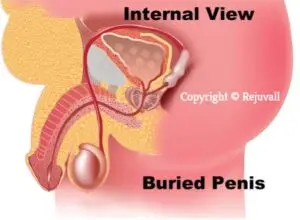
Internal anatomy illustration of buried penis showing suprapubic fat pad concealment of the shaftLevel One: More than 75% of flaccid size visible
Level Two: 40%-74% of flaccid length visible
Level Three: When non-erect, only approximately an inch of your penis shaft is visible.
Level Four: When the penis is flaccid, just the glans (head) is visible.
Level Five: No visible penis when flaccid

Clinically speaking, what you’re able to see of your penis organ looking down upon it is the portion that comes out from under your pelvic bone. There’s more of it inside your body that you can trace with your fingers starting within the scrotum.

If you reach down with your fingers and explore your organ from the underside within the scrotum, you’ll be able to track that it goes straight backwards for about an inch, then it begins a downward path to where it begins near your anus.

Have you ever felt that large ridge inside your scrotum when erect? That’s your penis organ.

The penis continues inside your body near the anus where it splits horizontally on both sides and anchors itself to your lower pelvic bone. The fact it’s anchored to this bone is the key reason your penis can lose additional penis length if you’ve also gained extra weight.

As increased amounts of weight accumulate in the stomach area, the excesses in the lower body area begin to apply pressure to the base of where the penis is tethered to the pelvic bone.

This pressure from overcrowding causes the base of your inner penis to retract in response, thereby reducing your penile length.

How does lost penile size from an enlarged fat pad affect men?

Whether disrobing in front of an intimate partner or alone in front of a mirror, men with an enlarged fat pad frequently feel ashamed of their condition.

Many men experience worries when their penis is smaller. But what if a man used to be larger but is now smaller? That frequently results in depression.

Additionally, it may lead to decreased sexual performance and enjoyment. The depth of penetration a man can get during intimacy is restricted by an engorged suprapubic fat pad.

Many men also say that it causes them to thrust harder in an effort to make up for the diminished size, which isn’t always fun for their partner (or them).

Some men claim that because their thrusts are more forceful, they ejaculate more quickly, which prepares them for a new kind of battle with premature ejaculation.

Long Term Dangers of an Engorged Fat Pad

Buried penis educational image showing reduced visible shaft length due to suprapubic fat pad and skinUnfortunately, lost penile size and less than ideal sexual encounters aren’t the only negative outcome of an engorged fat pad. The situation is progressive in nature.

Failure to treat an engorged fat pad clinically will eventually result in a separation of the dartos fascia from the body, kicking off the process by which the body gradually absorbs the penile shaft skin.

Also, if the penis remains enveloped by the suprapubic fat pad for several years, the body will begin to reabsorb the skin along the shaft of the penis and never returns.

Thus, even if significant weight is lost through gastric bypass or similar procedures, the penis is unable to return to its natural length without major surgery.

Such a reconstructive operation includes degloving the original penile shaft, harvesting a new donor shaft (usually with skin grafts from within the inner thigh), and transplanting the donor shaft to the organ.

Additionally, there are usually various cosmetic enhancements involved such as liposuction, skin tightening, and repositioning of the belly button. Full penile reconstruction usually involves at least a one week stay in the hospital plus numerous follow up visits and a month or more off from work.

Sadly, this procedure is ridiculously expensive. Having health insurance helps since the inability to urinate in a healthy manner falls within most policies. However, most patients with insurance face out of pocket expenses of over $70,000 from start to finish.

Will weight loss help the condition?

In 95% of cases, notable weight loss can have a dramatic impact on lost size from an engorged fat pad. However, in cases where the underlying diagnosis is completely genetic, even significant weight loss won’t reduce its size.

The recent success of prescribed semaglutides provides hope for men needing to lose weight. Some men qualify for a gastric-bypass-type procedure that will be covered by their health insurance. This is another popular pathway for men with an elevated BMI.

Penis Enlargement Surgery Procedures to Address Lost Penile Size From an Engorged Fat Pad

Excess fat in the pubic area, often called an engorged fat pad, can make the penis appear shorter by covering part of its length. For men looking to restore their lost penile size, specialized penis enlargement surgery procedures offer effective solutions.

These techniques focus on reducing the fat pad and enhancing the visible length of the penis, providing both aesthetic and functional improvements.

Liposuction and Monsplasty Procedures

Illustration of suprapubic fat pad reduction and contouring options for restoring visible penile lengthFor years, the most common approach to resolving the issue of lost penile size from an engorged fat pad was either a liposuction or monsplasty procedure to reduce its size.

Alas, it was observed that liposuction or a monsplasty can temporarily improve the appearance of the penis, but if the patient’s case also included a separated dartos fascia (which occurs in 50% of patients), their body would begin to reabsorb their penis shaft skin, reversing the temporary benefits of their lipo or monsplasty and eventually making their case worse and the patient, even smaller.

Liposuction procedures in this area are notorious for damaging the penile neurovascular bundle and should only be performed by a board-certified urologist.

When injured, the result is noticeable pain when erect. Destroy it? The patient will experience a loss of sensation or chronic penile discomfort, often resulting in severe erectile dysfunction.

Finally, men over the age of 25 with a swollen suprapubic fat bulge will typically lose the visible benefits of liposuction due to resulting sagging skin over the penis. This last mistake is the source of many subsequent repair procedures.

World’s Recognized Buried Penis Expert Invents Breakthrough New Surgical Procedures

Dr. Kenneth J. Carney, MD, PharmD, FACS — board-certified urologist and reconstructive surgeon at RejuvallAs the founder and institute director of the only (GURS) certified fellowship (teaching other board-certified urologists) in Reconstructive and Plastic Urology within genitourinary reconstruction and major abdominal cases, urologic surgeon Kenneth J. Carney, MD PHARM FACS, is considered the world’s expert authority on reconstructive urology related to enlarged fat pad cases.

Because of his surgical specialty, he became a specialist in doing surgical restorations on individuals who were extremely obese. We are discussing men weighing between 700 and 1,000 pounds.

He developed a brand-new series of specialized “outpatient” operations for men who have smaller penises as a result of genetically predisposed suprapubic fat pads as a result of this exceptional experience.

Since these are outpatient procedures, patients must first achieve the sort of BMI necessitated by out-patient anesthesia requirements, but the resulting outcomes are often life changing.

Ready for a real medical answer—not internet noise?

If you’re considering penile enhancement, the safest first step is an evaluation with a board-certified urology team that can review your goals, anatomy, and options (surgical and non-surgical) and explain realistic outcomes and risks.

Request a consultation to discuss:

  • Your goals (girth, visible length, or both)
  • Candidate screening and safety factors
  • Product verification standards for injectable options
  • A staged plan when appropriate

Submit the form below to get instant access to our calendar, or call our office to speak with our patient education team.

[1] Erect penile length and circumference dimensions of 1,661 sexually active men in the United States, Debby Herbenick, et al. J Sex Med. 2014 Jan;11(1):93-101. doi: 10.1111/jsm.12244. Epub 2013 Jul 10.

[2] Intracavernous prostaglandin E1 in erectile dysfunction, LL Neff, Clin. Investig. 1994 Jan;72(2):139-49. doi: 10.1007/BF00184593.

[3] Journal of Sexual Medicine, (D. Herbenick, . Reece, V. Schick, S. Sanders) Epub 2013 Jul 10

[4] Vardi Y, Har-Shai Y, Gil T, Gruenwald I. A critical analysis of penile enhancement procedures for patients with normal penile size: surgical techniques, success, and complications. Eur Urol. 2008 Nov;54(5):1042-50. doi: 10.1016/j.eururo.2008.07.080. Epub 2008 Aug 8. Erratum in: Eur Urol. 2009 Apr;55(4):1002. Harshai, Yaron [corrected to Har-Shai, Yaron]. PMID: 18760874.

[5] Chi Ying Li, et al Penile Suspensory Ligament Division for Penile Augmentation: Indications and Results, European Urology, Volume 49, Issue 4, April, 2006. Pages 729-733

[6] Harlim, Ago et al , Dermatol Surge, 2018 Sep; 44(9): 1174–1182

[7] Lemperle G, Morhenn V, Charrier U. Human histology and persistence of various injectable filler substances for soft tissue augmentation. Aesth Plast Surg 2003;27:354–66.

[8] Zacharakis E, Dudderidge T, Zacharakis E, Ioannidis E. Surgical repair of idiopathic scrotal elephantiasis. South Med J. 2008;101(2):208–10

Picture of Dr. Steven L. Morganstern, M.D.

Dr. Steven L. Morganstern, M.D.

Dr. Morganstern is an internationally acclaimed, board-certified urologist, surgeon, and best-selling author specializing in men’s sexual health. A pioneer in erectile dysfunction therapeutics, Dr. Morganstern was the only private clinician selected for the original Viagra trials and has spent over four decades advancing treatments in ED, cosmetic urology, hormone replacement, and prostate health.

Scroll to Top